
 English
 русский
 Español
 عربى
عربى
Product Consultation
Your email address will not be published. Required fields are marked *

Coming From China, Marketing To The World.
Content
Laptop battery noise reduction label stickers are specialized adhesive labels applied directly to the surface of laptop battery packs, primarily serving two simultaneous functions: providing essential identification and compliance information, and dampening the mechanical vibration and acoustic noise that battery cells can generate during charging and discharging cycles. Unlike generic adhesive labels, these stickers are engineered with specific material compositions — typically multi-layer laminates combining foam cores, non-woven fabrics, or butyl rubber substrates with printed face materials — that allow them to absorb vibrational energy at the battery surface level. The result is a component that electronics manufacturers treat as both a functional noise control measure and a mandatory regulatory label, all within a single thin, precisely die-cut part.
Inside a laptop, the battery pack sits in close proximity to the chassis floor, internal frame members, keyboard deck, and cooling system components. When lithium-ion or lithium-polymer cells undergo electrochemical reactions during charge and discharge, they expand and contract slightly — a phenomenon known as breathing — and generate micro-vibrations transmitted through the battery casing into the surrounding chassis. These vibrations can manifest as faint buzzing, rattling, or humming noises that are particularly noticeable in quiet environments. A well-specified noise reduction label sticker, applied to the battery's outer surface, interposes a vibration-absorbing layer between the battery casing and the chassis contact points, decoupling the two surfaces and reducing the transmission path of structure-borne noise.
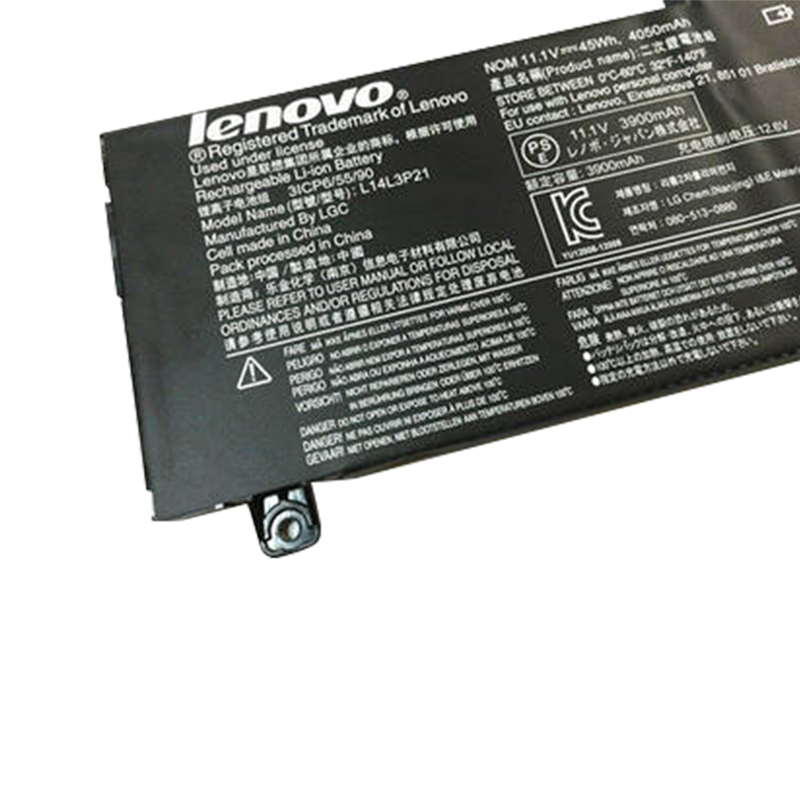
Understanding why laptop batteries produce noise in the first place is essential context for appreciating why noise reduction label stickers are a genuine engineering solution rather than a superficial cosmetic addition. Lithium-ion cells — the chemistry used in virtually all modern laptop batteries — generate noise and vibration through several distinct physical mechanisms that operate simultaneously during normal operation.
During charging, lithium ions intercalate into the graphite anode, causing it to physically expand. During discharge, those ions migrate back to the cathode and the anode contracts. This expansion-contraction cycle — sometimes called cell breathing — causes the battery pack housing to flex microscopically. In a pouch-type lithium-polymer cell, which lacks a rigid metal casing, this breathing is more pronounced, and the flexible pouch surface can vibrate against adjacent surfaces if not properly restrained. In cylindrical or prismatic cells, the rigid casing constrains breathing but transmits the mechanical stress as vibration into the mounting structure. Label stickers with compliant foam layers conform to these dimensional changes and absorb the associated vibrational energy rather than transmitting it.
Battery cells generate heat during both charging and discharging, particularly under high current loads such as fast charging or running demanding applications. This heat causes thermal expansion of the battery casing, battery management system (BMS) board, and the connecting wires and busbars within the pack. As these components expand and contract with changing temperatures, they can produce clicking or ticking sounds — similar to the thermal expansion sounds familiar from heating pipes — as friction between components is released suddenly. A noise reduction label applied between the battery outer surface and the chassis floor creates a compliant buffer that absorbs these micro-movements rather than allowing them to produce audible impacts.
Many laptop cooling fans operate at speeds that produce vibration frequencies capable of resonating with other chassis components, including the battery pack. When the fan's rotational frequency matches the natural resonant frequency of the battery assembly or its mounting position, the battery can act as an acoustic radiator — amplifying the fan noise and re-radiating it into the chassis. Noise reduction label stickers with viscoelastic damping properties shift or suppress these resonant frequencies by adding mass and damping to the battery surface, disrupting the resonance condition and reducing the acoustic output.
The noise reduction and acoustic damping performance of a battery label sticker is entirely determined by its material construction. Manufacturers use a variety of substrate and laminate combinations depending on the target frequency range, operating temperature requirements, thickness constraints, and printing specifications of the end application. The most commonly used material systems are described below.
Polyurethane (PU) foam and polyethylene (PE) foam are the most widely used backing materials for noise reduction battery labels. PU foam offers excellent vibration absorption across a broad frequency range and is available in densities from 20 to 200 kg/m³, with softer grades providing better vibration isolation and denser grades providing better structural support. The foam layer is typically 0.3mm to 2.0mm thick — thinner foams for space-constrained designs where internal clearances are minimal, and thicker foams where greater vibration isolation is required. The foam backing is laminated to a printed face material (usually polyester or polypropylene film) and finished with a pressure-sensitive adhesive on the battery-contact side. Some designs incorporate an additional non-woven fabric layer between the foam and the face film to improve dimensional stability and prevent the foam from compressing permanently under sustained contact pressure.
For applications requiring superior vibration damping — particularly at low frequencies below 500 Hz where foam materials are less effective — butyl rubber or viscoelastic polymer layers provide the most effective energy dissipation. Viscoelastic materials convert mechanical vibration energy into heat through internal molecular friction, a property characterized by the loss factor (η) of the material. High-performance viscoelastic damping tapes used in battery label applications can achieve loss factors of 0.5 to 1.0 at room temperature, compared to 0.01 to 0.05 for untreated aluminum or steel chassis panels. Butyl rubber compounds are also inherently airtight and moisture-resistant, making them suitable for batteries in humid operating environments or where sealing around the label perimeter is required.
Non-woven polyester or polypropylene fabric substrates offer a different approach to noise reduction — rather than absorbing vibration through compression of a foam or rubber layer, they reduce surface-to-surface contact between the battery and the chassis through their inherently textured, fiber-based surface. The irregular surface topology of a non-woven fabric reduces the effective contact area between two surfaces, which reduces the efficiency of vibration transmission between them. Non-woven fabric labels are thinner than foam-backed alternatives — typically 0.1mm to 0.4mm — making them preferred in ultra-thin laptop designs where internal clearances are extremely tight. They also provide good scratch and abrasion protection for the battery outer surface during assembly handling.
| Material Type | Typical Thickness | Best Frequency Range | Key Advantage |
| PU Foam Laminate | 0.5mm – 2.0mm | 500 Hz – 5,000 Hz | Broad frequency absorption, low cost |
| PE Foam Laminate | 0.3mm – 1.5mm | 1,000 Hz – 8,000 Hz | Chemical resistance, consistent compression |
| Butyl Rubber | 0.5mm – 3.0mm | 50 Hz – 1,000 Hz | Superior low-frequency damping, moisture seal |
| Viscoelastic Polymer | 0.2mm – 1.0mm | 100 Hz – 3,000 Hz | High loss factor, thin profile |
| Non-Woven Fabric | 0.1mm – 0.4mm | Contact decoupling (broadband) | Ultra-thin, good for tight clearances |
Beyond their acoustic and vibration damping function, battery label stickers serve as the primary carrier of mandatory regulatory, safety, and identification information required by international standards and import/export regulations. The printed content on a laptop battery label must satisfy the requirements of multiple overlapping regulatory frameworks simultaneously, and the printing technology used must ensure that this information remains legible throughout the expected service life of the battery — typically three to five years or 500 to 1,000 charge cycles.
The choice of printing technology for laptop battery noise reduction label stickers must balance print quality, cost, production volume, and durability requirements. Thermal transfer printing is the most common production method for battery labels at medium to high volumes, using a heated printhead to transfer ink from a ribbon onto the label face material. Thermal transfer produces high-contrast, highly durable print that resists oils, solvents, and abrasion — important for labels that will be handled during laptop assembly and then enclosed inside the device for years. For the finest detail — including small Data Matrix barcodes, fine-pitch regulatory text, and multi-color logos — digital inkjet printing or UV inkjet printing is increasingly used, offering variable data printing capability without tooling changes between batches. Screen printing is used for very large production runs where the setup cost is amortized across millions of units, and laser etching is used for premium applications where the label surface is marked directly without ink, providing a mark that cannot be removed or falsified.
The pressure-sensitive adhesive (PSA) used on a laptop battery noise reduction label sticker must maintain reliable adhesion to the battery pack outer surface — typically polypropylene, ABS plastic, aluminum foil laminate, or bare aluminum — throughout the battery's operational temperature range, humidity exposure, and service life. Adhesive failure that allows the label to peel, bubble, or detach not only exposes the battery to potential short circuits from conductive label debris inside the laptop but also undermines the noise reduction function, since a partially detached label no longer maintains conformal contact with the battery surface and cannot transmit vibrational energy effectively into the damping layer.
Acrylic pressure-sensitive adhesives are the standard choice for most battery label applications, offering excellent adhesion to a wide range of substrate chemistries, good temperature resistance up to 120–150°C, and outstanding aging stability — acrylic adhesives do not yellow, dry out, or lose tack over multi-year timeframes as some rubber-based adhesives do. For labels applied to low-surface-energy substrates such as polypropylene battery housings, which are inherently difficult to bond, modified acrylic or hybrid acrylic-rubber adhesive systems with enhanced initial tack are required. The peel adhesion strength of the adhesive system is typically specified at 90° peel to the target substrate using ASTM D903 or PSTC-101 test methods, with minimum values of 15–25 N/25mm being typical for reliable battery label adhesion in service.
For electronics product designers, procurement engineers, and OEM suppliers responsible for sourcing battery label stickers, the specification process requires careful consideration of several interdependent parameters. Getting the specification right at the design stage prevents costly label failures, compliance issues, and acoustic performance shortfalls that may not be discovered until finished product testing or, worse, after customer shipments have begun.
When a laptop battery is replaced — either as a warranty service, an authorized repair, or a user self-replacement — the battery noise reduction label sticker situation requires attention. Replacement batteries from original equipment manufacturers (OEMs) are supplied with their own pre-applied label stickers, which have been validated for both compliance and acoustic performance with the specific laptop model. However, aftermarket replacement batteries from third-party suppliers vary widely in label quality: some replicate the OEM label accurately, some apply generic labels that satisfy only basic compliance requirements without noise reduction functionality, and some apply low-quality labels that may peel, bubble, or fail to adhere correctly in service.
For users who notice increased battery-related noise after installing a replacement battery — particularly a faint buzzing or humming that was not present with the original battery — the absence or poor condition of a noise reduction label sticker is a likely contributing factor. In such cases, applying a correctly specified aftermarket noise reduction foam tape or label sticker to the battery outer surface can restore the acoustic performance of the original design. Products marketed as "acoustic foam tape" or "vibration damping tape" in thicknesses of 0.5mm to 1.5mm, cut to match the battery surface dimensions and applied carefully to avoid air bubbles, provide a practical aftermarket solution. Ensure any such tape is rated for the operating temperature range of the battery — at least -20°C to +70°C — and uses an adhesive compatible with the battery housing material before application.
Aluminum Foil Fiberglass Felt: Thermal Insulation Structure, Performance Data, and Industrial Applications
High Temperature Splash-Proof Tape for Ship Pipes Guide
Your email address will not be published. Required fields are marked *
 Self Adhesive Label Material Manufacturers