
 English
 русский
 Español
 عربى
عربى





Industry Knowledge
Thermal Insulation Mechanisms and Nanoporous Structure of Aerogel Films
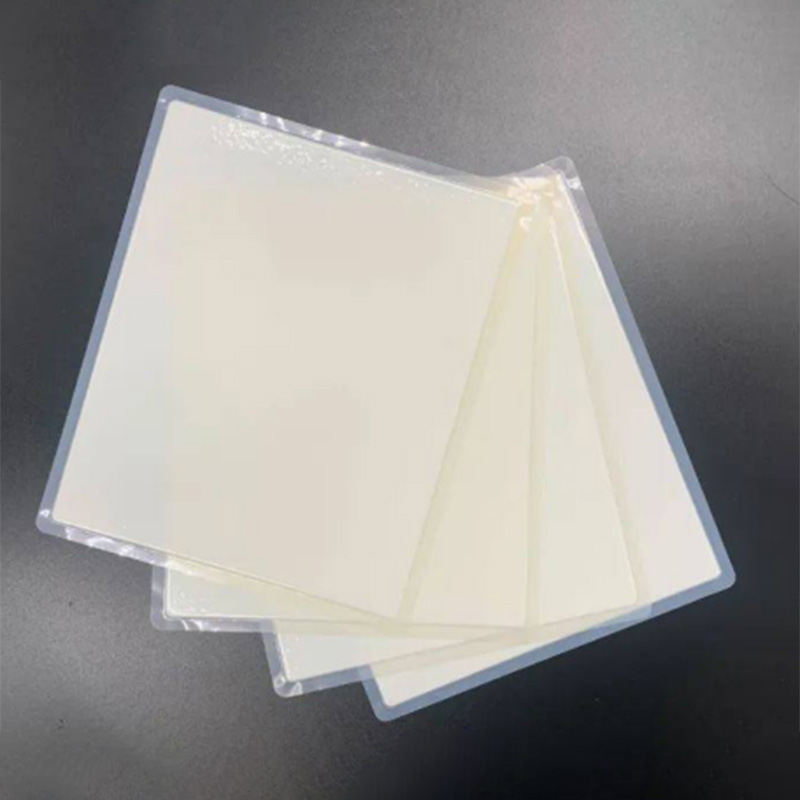
The exceptional thermal insulation performance of Aerogel Flame Retardant Packaging Film originates from its nanoporous silica skeleton, which suppresses all three heat transfer modes. With pore diameters concentrated between 2 and 50 nanometers—significantly smaller than the mean free path of air molecules at ambient pressure (approximately 70 nm)—the Knudsen effect traps gas molecules within the pore network, reducing gaseous thermal conductivity to less than 0.005 W/m·K. Solid-phase conduction is impeded by the highly tortuous silica backbone whose interconnected particle chains create a thermal path over 100 times longer than the film thickness. Radiative heat transfer is minimized through the incorporation of opacifying agents such as titanium dioxide or silicon carbide nanoparticles that scatter infrared radiation in the 2–8 μm wavelength range. The resulting total thermal conductivity of a properly formulated aerogel film can be as low as 0.015–0.020 W/m·K at room temperature, a value unmatched by conventional polymer foams or fiber mats of comparable thickness.
Critical Role of Pore Size Distribution in Heat Transfer Suppression
Maintaining a narrow pore size distribution is essential for consistent thermal performance across the entire Aerogel Flame Retardant Packaging Film. If a fraction of pores exceed 100 nm, localized convection currents can initiate within the larger voids, degrading the overall effective thermal resistance. Manufacturing processes that rely on supercritical CO₂ drying or ambient pressure drying with controlled surface modification achieve porosities of 90–98% while keeping the mean pore size below 40 nm. The resulting specific surface area, typically 600–1000 m²/g as measured by BET nitrogen adsorption, directly correlates with both thermal insulation efficiency and flame retardancy, because a high internal surface area promotes char formation and dilutes combustible gases during fire exposure.
Fire Barrier Performance in Thermal Runaway Propagation Scenarios
In new energy battery modules, thermal runaway of a single cell can cascade into a catastrophic pack-level event within seconds. Aerogel Flame Retardant Packaging Film functions as a firebreak interlayer that delays inter-cell heat transfer long enough for battery management systems to activate protective measures. When subjected to a 600°C propane flame per UL 2596 test protocol, a 1.0 mm thick aerogel film maintains a cold-face temperature below 180°C for over 10 minutes, while the silica matrix remains dimensionally stable without melting or dripping. This performance is attributable to silica's inherent non-combustibility and the film's ability to form a cohesive ceramic-like barrier that blocks both convective flame impingement and conductive heat flow through direct particle-to-particle contact.
| Material | Thermal Conductivity (W/m·K) | UL 94 Rating | Typical Thickness (mm) | Density (g/cm³) |
| Aerogel Flame Retardant Packaging Film | 0.015–0.020 | V-0 | 0.2–2.0 | 0.10–0.25 |
| Mica Sheet | 0.20–0.35 | V-0 | 0.5–3.0 | 1.8–2.5 |
| Ceramic Fiber Paper | 0.08–0.15 | V-0 | 1.0–5.0 | 0.15–0.30 |
Surface Coating Customization and Manufacturing Capabilities
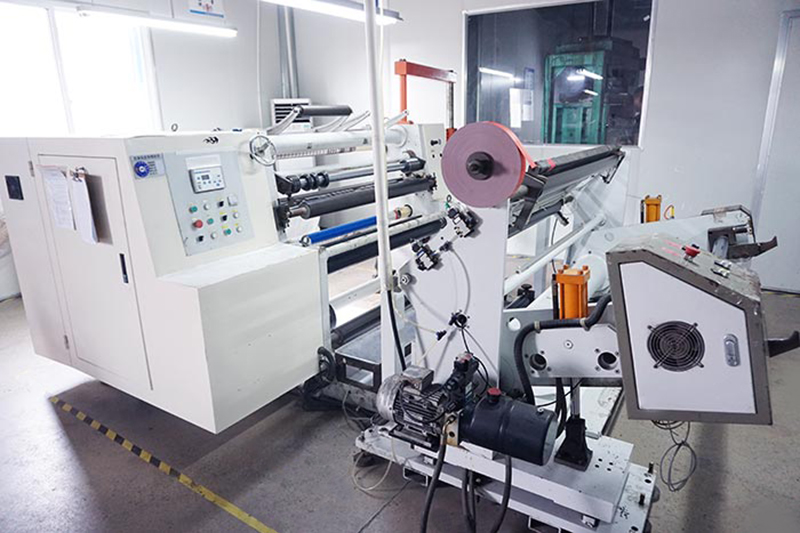
Anhui Yanhe New Material Co., Ltd., situated on a 17-acre site in the Guangde Economic Development Zone West, has since 2012 developed and manufactured specialty labeling materials, functional tapes for the electronics industry, and adhesive products for various functional film materials. The company applies corresponding surface coatings based on the functional requirements of customers' different surfaces, enabling the production of Custom Aerogel Flame Retardant Packaging Film with precisely engineered surface properties. Through collaborations with universities and scientific research institutions at home and abroad, the company leverages the industry's advanced new material research and development technologies and customized manufacturing capabilities to deliver integrated solutions for functional materials. This infrastructure allows the application of bespoke protective coatings that address the specific environmental challenges encountered in electric vehicle battery packs and energy storage systems.
Functional Coating Options for Enhanced Environmental Durability
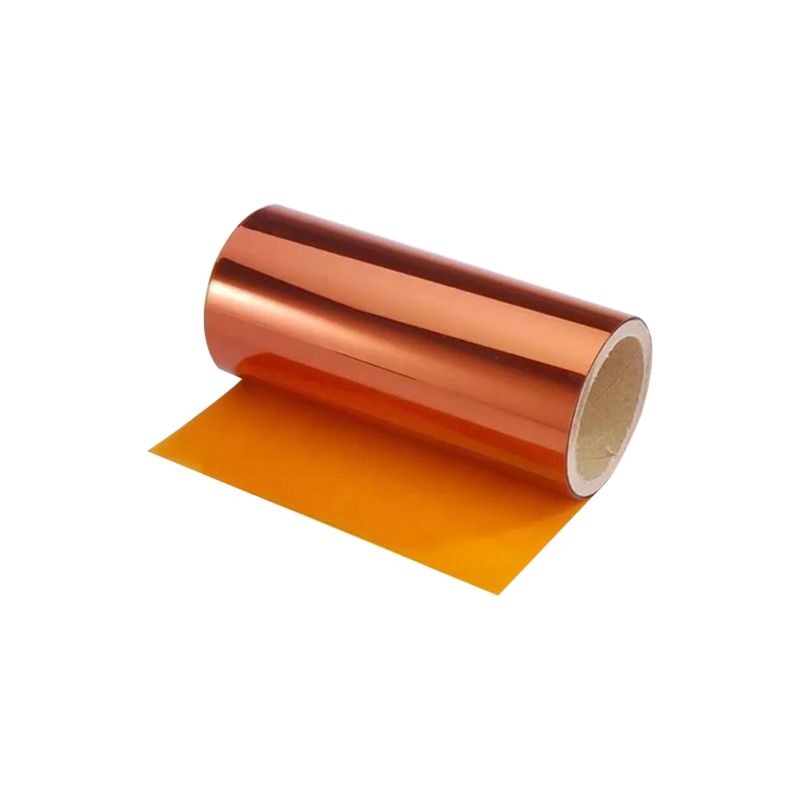
The base aerogel film can be laminated or coated with various functional layers. A thin fluoropolymer coating imparts hydrophobicity with water contact angles exceeding 130°, preventing moisture adsorption that would otherwise compromise thermal performance in humid environments. For applications demanding extreme wear resistance, a ceramic-filled UV-cured hard coat can be applied that raises the pencil hardness to 6H or higher, protecting the film from abrasion during cell insertion and module assembly. Metalized aluminum or copper coatings can be selectively applied via physical vapor deposition to create a combined thermal and electromagnetic interference shielding layer, adding less than 10 μm to the total thickness while maintaining the film's lightweight characteristics.
Mechanical Integrity and Compression Resilience in Module Assembly
The lightweight and high-strength characteristics of Aerogel Flame Retardant Packaging Film are critical during battery module assembly, where inter-cell spacing is often reduced to under 1 mm to maximize volumetric energy density. Despite its high porosity, the silica aerogel network reinforced with a non-woven fiber mat carrier (typically glass or PET fibers) exhibits a compressive modulus of 0.5–5 MPa and can recover over 90% of its original thickness after being compressed to 50% strain for 24 hours at 60°C. This compression resilience ensures that the film maintains intimate thermal and electrical isolation between adjacent cells even after hundreds of charge-discharge cycles that induce slight expansion and contraction of the cell casings. The film's tensile strength, usually in the range of 1–5 MPa, provides sufficient handling robustness for roll-to-roll converting and automated pick-and-place assembly without tearing or fiber shedding that could contaminate battery connections.
Compatibility with Battery Chemistries and Electrolyte Systems
The chemical environment inside a battery pack poses long-term compatibility demands that many organic-based insulation materials fail to meet. Aerogel Flame Retardant Packaging Film exhibits high temperature resistance up to 600°C in oxidative atmospheres and up to 1000°C under inert conditions, while its silica chemistry is intrinsically resistant to the hydrofluoric acid that can form from LiPF₆ electrolyte decomposition. Accelerated aging tests in which the film is immersed in a mixture of ethylene carbonate, dimethyl carbonate, and 1M LiPF₆ at 85°C for 500 hours show negligible mass loss and no detectable degradation in thermal conductivity. The anti-chemical corrosion properties extend to commonly used cooling fluids, dielectric oils, and cleaning solvents, ensuring the film's stability and durability throughout the service life of electric vehicle batteries or stationary energy storage installations.
- Silica aerogel is impervious to oxidative degradation mechanisms that cause polyolefin foams to embrittle, maintaining its mechanical flexibility over thousands of thermal cycles.
- The film does not contain halogenated flame retardants, eliminating the risk of corrosive byproduct generation when exposed to electrical arcs or sustained heating.
- Metal oxide opacifiers integrated into the aerogel matrix act as acid scavengers, neutralizing trace acidic species that may permeate the film from degraded electrolyte.
- Custom Aerogel Flame Retardant Packaging Film can be formulated with a thin aluminum foil layer that serves as both a gas barrier and an additional flame shield without compromising the overall lightweight profile.
Integration Strategies with Thermal Management Systems
In electric vehicle battery packs, aerogel flame retardant packaging film is rarely deployed as a standalone solution; instead, it complements liquid cooling plates, phase change materials, and air-cooling channels. A common design places the aerogel film as a wrap around individual prismatic cells or as inter-layer separators between cell rows, directing heat toward the cooling interface while simultaneously preventing lateral flame propagation. The film's compressible nature allows it to be combined with gap-filling thermal pads that conduct heat to the cooling system while the aerogel layer blocks thermal crosstalk. Manufacturers can specify die-cut patterns with precise cutouts and slits that accommodate busbar connections and venting features, enabling seamless integration into automated assembly lines. The ability to supply these custom-converted rolls directly from a specialized converting facility ensures that pack designers can receive ready-to-install components rather than raw sheet stock, reducing on-site processing and quality risks.
