
 English
 русский
 Español
 عربى
عربى




Industry Knowledge
Viscoelastic Damping Mechanisms in Laptop Battery Noise Reduction Label Stickers
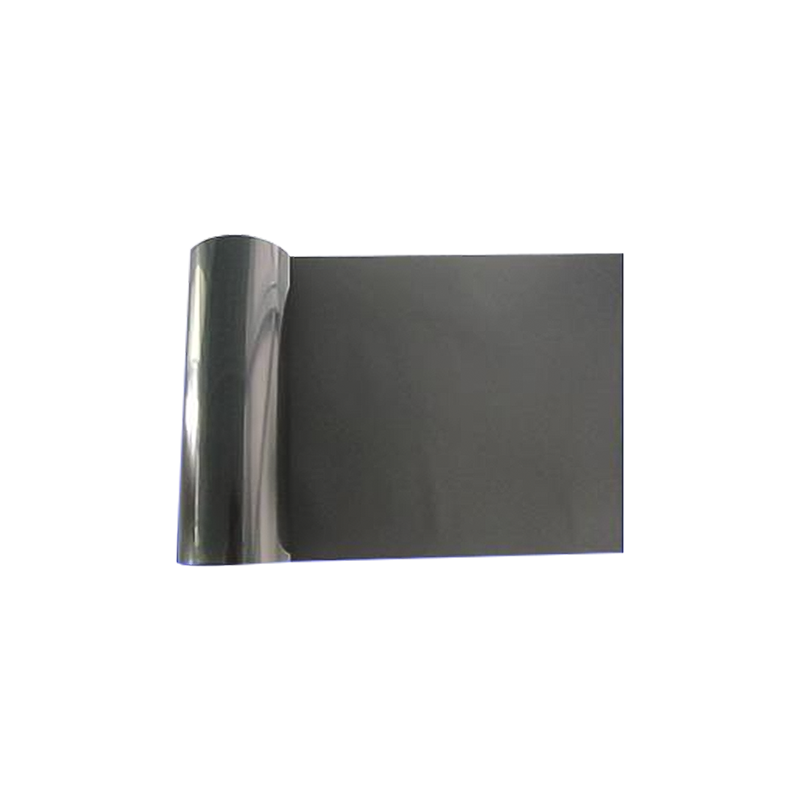
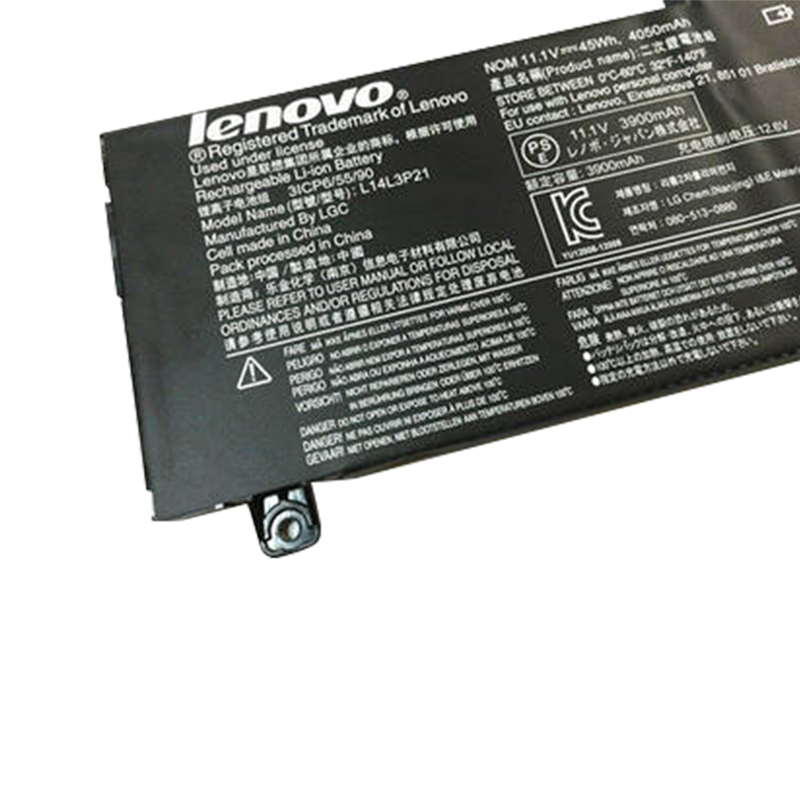
The core noise attenuation principle behind Laptop Battery Noise Reduction Label Stickers lies in viscoelastic damping technology. When a laptop battery undergoes charge-discharge cycles, subtle thermal expansion and contraction generate micro-vibrations that propagate through the battery housing. The viscoelastic polymer layer within these label stickers converts mechanical vibration energy into negligible thermal energy through internal molecular friction. This energy dissipation is most effective in the 200 Hz to 2000 Hz frequency range, which coincides with the primary vibrational output of lithium-ion battery packs under load. The lightweight and soft characteristics of the material ensure that the damping layer maintains intimate surface contact across the entire battery casing without adding meaningful mass, a critical consideration for portable electronics where every gram matters.
Frequency-Dependent Loss Factor Behavior
The loss factor of a viscoelastic damping material quantifies its efficiency in converting vibrational energy to heat. For the polymers employed in these noise reduction labels, the loss factor typically peaks between 0.3 and 0.8 within the glass transition region of the material. This means that at operating temperatures commonly encountered in laptop battery compartments—ranging from approximately 25°C to 55°C—the damping performance remains consistently high. Engineers at Anhui Yanhe New Material Co., Ltd. optimize the polymer formulation so that the glass transition temperature aligns precisely with the thermal operating window of consumer electronics, ensuring maximum noise suppression during real-world usage rather than only under ideal laboratory conditions.
Comparative Analysis of Noise Reduction Material Architectures
Not all acoustic dampening materials deliver equivalent performance when integrated into compact electronic assemblies. The table below compares four common material approaches used for battery noise management, highlighting key performance differentiators relevant to Laptop Battery Noise Reduction Label Stickers and their alternatives in the marketplace.
| Material Type | Damping Efficiency | Heat Resistance | Thickness Profile | Chemical Stability |
| Viscoelastic Polymer Label | High (Loss Factor 0.3–0.8) | Up to 120°C continuous | 0.15–0.50 mm | Excellent |
| Open-Cell Foam Pad | Moderate | Up to 80°C | 1.0–3.0 mm | Moderate (hygroscopic) |
| Silicone Rubber Sheet | Moderate-High | Up to 200°C | 0.5–2.0 mm | Good |
| Non-Woven Fabric Interliner | Low | Up to 90°C | 0.3–0.8 mm | Poor (fiber shedding) |
As demonstrated in the comparison above, viscoelastic polymer-based Laptop Battery Noise Reduction Label Stickers achieve the most favorable balance of thin profile, high damping efficiency, and robust chemical stability. This combination makes them particularly suitable for the confined internal geometries of modern ultrabook and gaming laptop battery compartments, where millimeter-scale clearances leave no room for thicker foam or rubber alternatives.
Functional Surface Coatings and Their Role in Extended Service Life
Beyond the viscoelastic core layer, the surface coatings applied to noise reduction labels serve multiple protective functions that directly impact long-term reliability. Anhui Yanhe New Material Co., Ltd., founded in 2012 and situated on a 17-acre site in the Guangde Economic Development Zone West, specializes in applying corresponding surface coatings based on the functional requirements of customers' different surfaces. For laptop battery applications, a common configuration includes a hard-coated PET facing layer that provides abrasion resistance during automated assembly, combined with a pressure-sensitive adhesive system engineered to maintain bond integrity across thousands of thermal cycles. The surface coating can also incorporate flame-retardant additives that meet UL 94 V-0 or VTM-0 classifications, an increasingly important requirement as battery energy densities continue to rise.
Custom Coating Formulations for Specialized Environments
The company's ability to collaborate with universities and scientific research institutions at home and abroad enables the development of Custom Laptop Battery Noise Reduction Label Stickers with application-specific coating formulations. For instance, laptop models destined for tropical climates may require enhanced hydrolysis resistance in the adhesive layer, while devices intended for high-altitude usage benefit from low-outgassing adhesive chemistries that prevent bubble formation under reduced atmospheric pressure. These tailored solutions draw on the industry's advanced new material research and development technologies and customized manufacturing capabilities that Anhui Yanhe New Material Co., Ltd. has cultivated over more than a decade of operation in the functional materials sector.
Thermal Endurance and Heat Cycling Stability Under Operational Loads
Laptop batteries routinely experience temperature fluctuations from ambient conditions at startup to 45–55°C during sustained high-performance computing or fast-charging scenarios. The heat-resistant nature of these noise reduction labels is not merely a passive property but an actively engineered characteristic. The polymer matrix is formulated with thermal stabilizers that inhibit oxidative degradation, while the cross-linking density of the adhesive layer is calibrated to prevent creep or edge lifting when the battery surface temperature rises. Testing conducted by China Laptop Battery Noise Reduction Label Stickers Manufacturers typically involves 1,000-hour accelerated aging at 85°C and 85% relative humidity, with acceptable performance defined as less than 10% degradation in peel adhesion and no visible dimensional change. The material's ability to withstand these conditions without embrittlement or delamination ensures that noise reduction performance remains stable throughout the typical 3–5 year service life of a laptop battery pack.
Chemical Corrosion Resistance in Battery Compartment Environments
The internal environment of a laptop battery compartment presents multiple chemical exposure risks that lesser materials cannot withstand. Electrolyte vapors, if a cell experiences microscopic seal degradation, can create a mildly acidic microclimate. Cleaning solvents used during device servicing, fingerprint residues from assembly operators, and volatile organic compounds emitted by adjacent PCB components all contribute to a chemically complex environment. The resistance to chemical corrosion engineered into these label stickers stems from the inherently inert nature of the cross-linked acrylic adhesive system and the fluoropolymer or silicone-treated release liners used during manufacturing. As a Laptop Battery Noise Reduction Label Stickers Factory with vertically integrated coating and laminating capabilities, Anhui Yanhe New Material Co., Ltd. conducts immersion testing in common solvents including isopropyl alcohol, acetone, and synthetic sweat simulants to validate that label integrity and damping performance remain unaffected after exposure.
- Acrylic adhesive systems resist plasticizer migration from adjacent polymer components, preventing the softening and adhesive failure that plagues rubber-based alternatives.
- Fluoropolymer surface treatments create a low-energy surface that repels liquid contaminants, reducing the risk of capillary wicking along the label edges.
- Cross-linked polymer networks maintain dimensional stability even when exposed to electrolyte solvent vapors at concentrations up to 100 ppm.
- Anti-fungal additives can be incorporated into the coating formulation for devices destined for humid climates where mold growth on organic substrates is a concern.
Precision Converting and Application-Specific Die-Cutting Tolerances
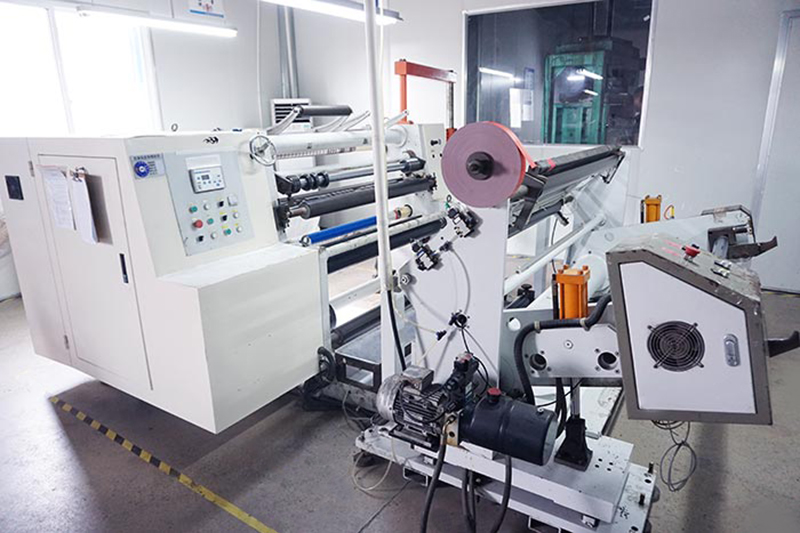
The manufacturing precision required for Laptop Battery Noise Reduction Label Stickers extends far beyond the material formulation itself. The company's primary operations encompass specialty labeling materials, functional tapes for the electronics industry, and adhesive products for various functional film materials. Converting these materials into finished label stickers demands rotary die-cutting systems capable of holding positional tolerances of ±0.15 mm on feature dimensions and ±0.10 mm on registration between the adhesive island and the label perimeter. Such precision is essential because the label must cover designated contact zones on the battery surface without encroaching on venting features, connector interfaces, or screw bosses. Multi-layer kiss-cutting techniques allow the production of labels with stepped adhesive coverage, where certain zones feature full adhesion while others use a low-tack adhesive to facilitate future battery replacement during device servicing. As one of the established China Laptop Battery Noise Reduction Label Stickers Manufacturers, Anhui Yanhe New Material Co., Ltd. is committed to providing customers with integrated solutions for functional materials that encompass material selection, coating formulation, and precision converting under one quality management system.
Installation Parameters That Maximize Acoustic Attenuation Performance
Even the most carefully engineered noise reduction label will underperform if installation parameters are not optimized. Surface preparation is the single most influential factor: the battery casing surface should be cleaned with a lint-free wipe saturated in a 70% isopropyl alcohol solution and allowed to evaporate completely before label application. The recommended application pressure for Custom Laptop Battery Noise Reduction Label Stickers is 15–25 N/cm² applied via a silicone roller, which ensures that the viscoelastic layer achieves full wet-out against the substrate micro-texture. This wet-out is critical because entrapped air pockets act as acoustic impedance discontinuities that reflect rather than absorb vibrational energy, reducing overall damping effectiveness by up to 30%. Temperature during application should be maintained between 18°C and 28°C, as colder conditions increase adhesive viscosity and inhibit flow into surface asperities. After application, a dwell time of 24 hours at room temperature allows the pressure-sensitive adhesive to build full bond strength through polymer chain relaxation, after which the noise reduction and buffering performance reaches its designed specification. For high-volume production environments, automated pick-and-place systems integrated with vision alignment can achieve placement accuracy of ±0.05 mm, ensuring that each label consistently covers the intended damping zone on every battery unit passing through the assembly line.
