
 English
 русский
 Español
 عربى
عربى





Industry Knowledge
How the Pearl Effect Actually Forms Inside the Film
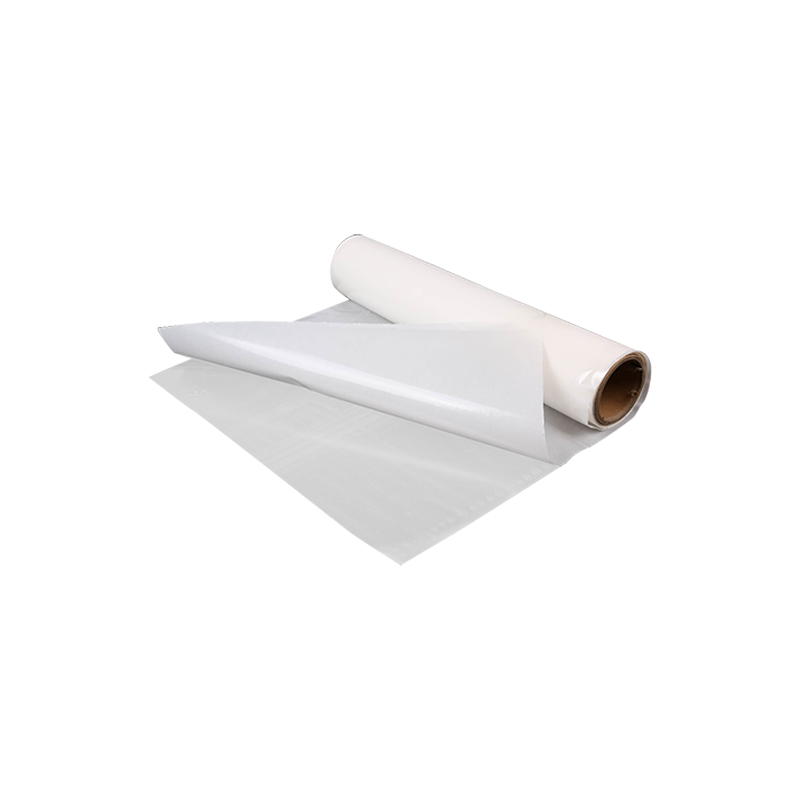
The shimmer in Pearlescent Film Synthetic Paper isn't a printed or laminated visual effect — it's created inside the polymer structure itself. Manufacturers disperse fine calcium carbonate and pearlescent pigment particles into a polypropylene core layer, then run the film through biaxial stretching. As the polymer molecules orient along both the machine and cross directions, microscopic voids open up around each pigment particle, and it's those voids that scatter and refract light to produce the soft, layered pearl appearance rather than a flat printed sheen.
This cavitation process is why the pearl effect stays consistent even after folding, creasing, or heat sealing — the light-scattering structure is embedded through the cross-section of the film, not sitting on the surface where it could scratch or wear off. Getting this consistent from roll to roll depends heavily on how evenly the pigment masterbatch is dispersed before stretching, which is a formulation detail that separates uniform, defect-free pearl film from batches with visible streaking or mottled patches.
Why Cavitated Structure Changes the Economics of Coverage
The same voids that create the pearlescent look also lower the film's overall density. Standard polypropylene film runs at roughly 0.9 g/cm³, while cavitated pearlescent structures typically fall closer to 0.7 to 0.76 g/cm³. In practical terms, that means a roll of pearlescent film covers noticeably more surface area per kilogram than an equivalent-thickness solid film — a detail that matters directly to converters and brand owners buying material by weight.
This lower density also affects stiffness and opacity. The trapped micro-voids scatter light internally, which is part of why pearlescent structures achieve high opacity at relatively thin gauges — useful for hiding underlying print layers or substrate color without adding extra material thickness. Buyers evaluating cost per square meter rather than cost per kilogram should factor this density difference in directly, since a simple price-per-kilogram comparison against solid film can be misleading.
Where Synthetic Paper Outperforms Traditional Pulp-Based Stock
Wood-pulp paper swells, tears, and loses print clarity the moment it takes on moisture. A polymer-based facestock doesn't have that failure mode, since there's no fiber structure to absorb water in the first place. That's the core reason Pearlescent Film Synthetic Paper and other synthetic facestocks are specified for cosmetics, food, and outdoor labeling applications where a label might sit on a refrigerated surface, get splashed with liquid, or face direct sun exposure for months.
| Condition | Pulp-Based Paper | Synthetic Film Facestock |
|---|---|---|
| Moisture exposure | Swells, tears, fades | Unaffected, remains intact |
| Tear resistance | Low to moderate | High |
| UV and outdoor stability | Yellows and fades quickly | Stable over extended exposure |
| Chemical and grease resistance | Poor | Strong |
Printability Needs a Dedicated Surface Treatment, Not Just a Smooth Film
A raw polypropylene surface doesn't accept ink well on its own — the same low surface energy that makes the film water-resistant also makes it resistant to ink bonding. This is why synthetic paper facestocks, pearlescent or otherwise, are almost always finished with a dedicated topcoat engineered for ink absorption rather than left as bare film. Without that coating, printed graphics scratch off or smear under normal handling within days.
Matching the coating to the print method
Different printing technologies — gravure, flexo, UV offset, thermal transfer — each require a slightly different coating formulation to achieve full ink lay-down and rub resistance. A topcoat optimized for flexo printing won't necessarily perform the same way under a thermal transfer ribbon, which is why print method should be confirmed before finalizing a facestock specification rather than assumed to be interchangeable across coating types.
Surface Coatings Are Where Generic Film Becomes a Functional Material
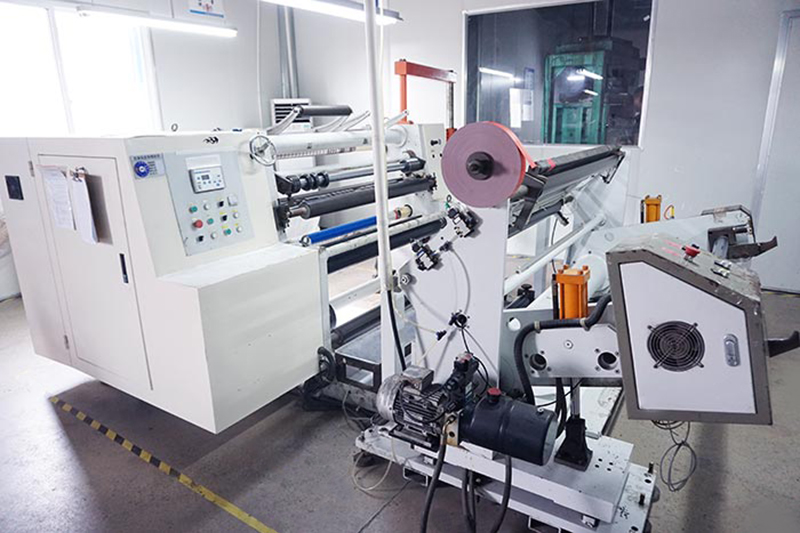
Anhui Yanhe New Material Co., Ltd., founded in 2012 and operating from a 17-acre production site in Guangde Economic Development Zone West, works with customers specifically at this coating stage rather than supplying pearlescent film as an undifferentiated commodity. As a manufacturer of specialty labeling materials and functional tapes for the electronics industry, the company applies surface coatings matched to each customer's specific functional requirement, adjusting formulation based on the target substrate and end-use environment rather than offering one fixed coating across every order.
For customers requiring Custom Pearlescent Film Synthetic Paper, that customization typically covers gloss level, ink receptivity, anti-static behavior for electronics-adjacent applications, and adhesive pairing suited to the final application surface. Because Anhui Yanhe collaborates with universities and research institutions on new material development, coating formulations can be adjusted for requirements that fall outside standard catalog specifications rather than forcing a customer's application to fit an existing product line.
Adhesive Bonding on Low-Surface-Energy Facestocks Requires Extra Steps
The same low surface energy that complicates printing also complicates adhesive lamination during manufacturing. Polypropylene-based films resist bonding unless the surface is first treated, typically through corona discharge treatment, which temporarily raises surface energy and creates the polar sites an adhesive layer needs to grip properly. Skipping or under-running this treatment step is one of the more common causes of delamination complaints reported months after a label has already been applied in the field — the failure isn't visible at the point of manufacture, but shows up later under stress, heat, or humidity.
- Corona treatment level should be verified as part of incoming quality checks, not assumed from a supplier's datasheet alone
- Treatment effectiveness decays over time in storage, so film held too long before adhesive coating can underperform even with correct initial treatment
- Adhesive chemistry should be selected to match the treated surface energy rather than defaulting to a general-purpose formulation
For applications combining pearlescent visual appeal with functional labeling performance, this surface preparation step is often the difference between a label that holds for its full intended service life and one that lifts at the edges within the first few months of use.
