
 English
 русский
 Español
 عربى
عربى





Industry Knowledge
The Influence of Dimensional Tolerance on Die-Cutting in Spacer Adhesive Stickers
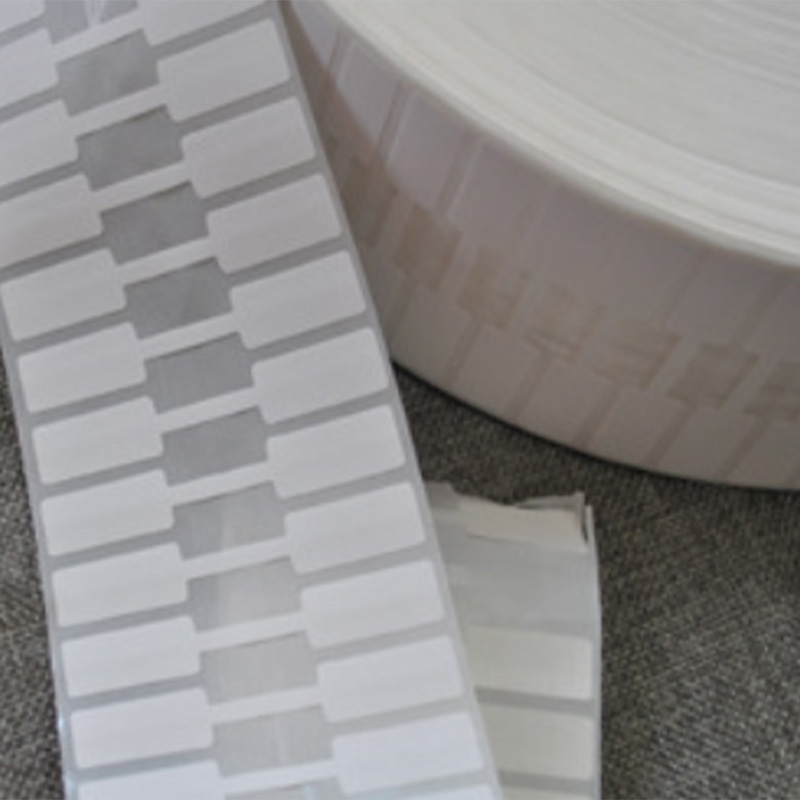
When specifying Spacer Adhesive Stickers for precision electronics, the tolerance stack-up can dictate the performance of the final assembly. While a standard sticker might allow a ±0.2mm variance, applications within camera modules or display backlight units demand a much tighter profile. At Anhui Yanhe New Material Co., Ltd., the focus during the slitting and die-cutting phase is on maintaining a tolerance as tight as ±0.05mm on the spacer width and thickness. This precision is critical because an oversized spacer can cause lifting or interference with adjacent flexible printed circuits, while an undersized spacer leaves the adhesive interface unsupported, leading to optical mura (visual distortion) in laminated glass displays. The factory environment in the Guangde Economic Development Zone West is equipped with high-speed rotary die-cutting machinery that compensates for material elongation, ensuring that the functional tapes maintain strict dimensional integrity even across the full 17-acre production campus run.
Managing Outgassing and Volatile Organic Compounds in Cleanroom Environments
A critical challenge in sealed electronic devices is the outgassing of volatile organic compounds (VOCs) from adhesive products. Standard acrylic adhesives can release siloxane rings that fog camera lenses or degrade electrical contacts over time. As a specialized Spacer Adhesive Stickers Manufacturers entity, Anhui Yanhe New Material Co., Ltd. has developed a range of solvent-free, high-solid-content adhesives that minimize this risk. The technology involves utilizing a low-outgassing, high-temperature curing process that strips away residual monomers before the material reaches the converter. This is especially vital for custom spacer configurations used in automotive LiDAR sensors, where thermal cycling from -40°C to 125°C amplifies outgassing rates. By applying surface coatings engineered to trap migratory particles, the company ensures that its functional tapes are compliant with NASA outgassing requirements and stringent ASTM E595 standards, preventing contamination in high-vacuum or hermetically sealed compartments.
Rheological Analysis: Why Viscoelasticity Defines Bonding Performance
The bonding success of a spacer sticker relies heavily on its viscoelastic nature, which determines how the material flows under stress. A purely elastic material would struggle to fill surface asperities, while a purely viscous material would lack cohesive strength. The technical team at the Spacer Adhesive Stickers Factory evaluates this through dynamic mechanical analysis (DMA), measuring the storage modulus (elasticity) and loss modulus (viscosity). For substrates with low surface energy, such as polypropylene battery packs, the customized manufacturing capabilities at Anhui Yanhe allow for the formulation of adhesives with a lower storage modulus at room temperature to maximize wet-out. Conversely, for high-shear structural positions, the adhesive is cross-linked to increase creep resistance. This deep understanding of rheology, supported by collaboration with domestic and international universities, allows for integrated solutions where the functional material stiffens post-application to act as a permanent structural shim rather than just a temporary spacer.
Liner Release Dynamics in Automated High-Speed Placement
One of the most frequent production downtime causes in electronics assembly is the erratic release of the release liner from die-cut parts. Custom Spacer Adhesive Stickers often feature complex, multi-laminate constructions where a tight liner release is required for kiss-cutting, yet a light release is needed for robotic pick-and-place. The surface coating technology applied by Anhui Yanhe New Material Co., Ltd. addresses this through differential release systems. By applying a tailored fluorosilicone or platinum-catalyzed silicone coating to the functional film materials, the liner releases consistently at a force measured between 5 and 25 grams per inch, depending on the automation speed. Inconsistent release can cause the thin spacer material to de-laminate or fly away during the vacuum picking sequence. The company’s ability to adjust the release profiles based on the functional requirements of different surfaces ensures that the adhesive remains firmly on the part, not on the liner, during 24/7 automated assembly operations.
Comparative Composition of Specialty Labeling Materials for Gap Filling
Not all gap-filling tapes perform identically under mechanical shock. The base material of a spacer adhesive sticker dictates its damping characteristics. Below is a comparison of common material formulations utilized in the development pipeline at the Guangde facility, highlighting how substrate choice directly impacts device durability, particularly in drop-test scenarios for handheld consumer electronics manufactured in China.
| Material Type | Shore Hardness Range | Impact Absorption Suitability |
| Polyurethane Foam | Shore OO 25-60 | Excellent; slow rebound recovery prevents screen bounce-back damage. |
| Acrylic Foam Tape | Shore A 30-70 | Moderate; high internal strength provides structural anti-shift rather than pure damping. |
| Silicone Gel Pad | Shore OO 10-30 | Superior; extreme temperature range keeps viscoelasticity stable from -50°C to 200°C. |
| PET Solid Spacer | Rockwell M-90+ | Poor; used strictly for precise non-compressible standoff gaps, not shock absorption. |
The Critical Role of Surface Energy Matching in Functional Tapes
Dynewetting Dynamics
Adhesion failure in electronic devices frequently originates from a mismatch between the surface energy of the substrate and the adhesive product. Glass and metal typically possess high surface energies (often >500 dynes/cm), making them easy to bond. However, the trend toward lightweight materials has introduced low-energy surfaces like polypropylene and powder-coated magnesium alloys. For Spacer Adhesive Stickers to function reliably, the adhesive must possess a surface energy lower than the substrate. The advanced material research at Anhui Yanhe New Material Co., Ltd. focuses on tuning the wetting angle; by incorporating low-molecular-weight tackifiers, the company creates functional tapes that readily flow into micro-roughness without requiring plasma or corona pre-treatment on the assembly line, drastically reducing the overall cost of ownership for the end-user.
Thermal Interface Integration: Combining Spacer Function with Heat Dissipation
A modern trend in the electronics industry is the merging of mechanical spacing with thermal management. Traditional spacer stickers are thermal insulators, trapping heat within components. Recognizing this, Anhui Yanhe New Material Co., Ltd. offers customized manufacturing capabilities for thermally conductive spacer adhesives. These specialized products incorporate ceramic fillers like aluminum oxide or boron nitride into the functional film materials. Located on the 17-acre site in the Guangde Economic Development Zone West, the research and development team works to balance filler loading without sacrificing the pressure-sensitive adhesive properties. The result is a multi-functional spacer that not only maintains a precise 0.1mm to 1.0mm gap between a processor and a shielding can but also serves as a heat spreader, pulling thermal energy away from hot spots and improving device performance by up to 5°C in confined tablet designs.
Chemical Anchoring on Fluoropolymer-Coated Substrates
Bonding to anti-smudge or oleophobic coatings, common on touch screen bezels, presents a significant technical barrier. Standard adhesives bead up and detach easily from these nano-coated surfaces. The collaborative work between Anhui Yanhe New Material Co., Ltd. and scientific research institutions has led to a hybrid anchoring system for specialty labeling materials. Rather than relying solely on Van der Waals forces, the adhesive is modified with reactive end groups that seek out the free hydrogen sites on the fluorinated coating. This creates a stronger molecular grasp without requiring aggressive etching of the device housing. For factories integrating Custom Spacer Adhesive Stickers around camera lenses or cover glass, this chemical anchoring provides a buffer against accidental detachment, which is a significant improvement over standard silicon-based alternatives that slowly creep over time under a static load, particularly in the hot and humid climate typical of many assembly plants in China.
Essential Checklist for Validating Adhesive Products in High-Vibration Environments
To guarantee that a spacer sticker will survive the operational life of automotive or aerospace electronics, validation must go beyond a simple peel test. As a Spacer Adhesive Stickers Factory supporting integrated solutions, Anhui Yanhe recommends a multi-axis stress screening protocol. This checklist ensures the functional tapes meet the highest durability standards:
- Dynamic Shear Resistance: Evaluate the holding power under a 1kg static load at 70°C for 10,000 minutes. The spacer must not drift more than 0.5mm to prevent short circuits in adjacent components.
- Constant Force Peel Angle Analysis: Test at 90° and 180° peel angles at a rate of 50mm/min to simulate both lifting and sliding forces that occur during thermal expansion mismatches between aluminum and glass.
- Frequency Sweep Analysis: Apply vibration from 10Hz to 2000Hz to ensure the viscoelastic adhesive does not reach its resonance point where it would instantly crystallize and shatter or disconnect.
- Edge Bleed-Out Inspection: After full cure, cross-section the spacer under a microscope. Any adhesive squeeze-out wider than 0.1mm is considered a defect that could trap dust in precision optics.
- Recovery Against Compression Set: Compress the spacer to 50% of its original thickness for 22 hours at 85°C. After release, it must recover to at least 85% of its original thickness within 60 seconds to maintain sealing integrity.
