
 English
 русский
 Español
 عربى
عربى
Product Consultation
Your email address will not be published. Required fields are marked *

Coming From China, Marketing To The World.
Content
Aluminum foil fiberglass felt is a high-performance composite material formed by laminating a layer of aluminum foil onto a fiberglass felt substrate, creating a product that combines the thermal reflectivity and barrier properties of aluminum with the sound absorption, vibration damping, and thermal insulation characteristics of fiberglass fiber structure. The fiberglass felt base is produced by bonding fine glass fibers into a dense, resilient mat using thermosetting binders, giving the material an open, porous internal structure that is highly effective at trapping and dissipating acoustic energy across a broad frequency range. The aluminum foil facing — typically bonded to one or both surfaces of the felt using high-temperature adhesive or thermal lamination — adds a reflective barrier that blocks radiant heat transmission, provides a clean and durable outer surface, and contributes additional stiffness to the composite structure.
This combination of functional layers makes aluminum foil fiberglass felt one of the most versatile noise reduction buffer materials available to engineers and designers working across automotive, electronics, and industrial applications. Unlike single-function materials that address either sound absorption or thermal management in isolation, aluminum foil fiberglass felt addresses both simultaneously within a single, compact material package — reducing system complexity, installation time, and total component cost in applications where both noise control and thermal protection are required.
To understand why aluminum foil fiberglass felt performs so effectively as a noise reduction buffer material, it is important to examine the acoustic and mechanical mechanisms at work within its layered structure. Sound energy travels through materials and air gaps via three primary pathways — airborne sound transmission, structure-borne vibration, and impact-generated noise — and an effective noise reduction buffer material must address all three to deliver meaningful acoustic improvement in real-world applications.
The fiberglass felt layer functions primarily as a sound absorber. When airborne sound waves enter the porous fiber matrix, the acoustic energy causes the air molecules within the fiber interstices to oscillate rapidly. Friction between the oscillating air molecules and the fine glass fibers converts kinetic acoustic energy into a small amount of heat — a process known as viscous dissipation — effectively removing that energy from the acoustic field. The efficiency of this absorption mechanism is proportional to the fiber diameter, fiber density, material thickness, and the tortuosity of the air path through the felt, all of which can be engineered by the manufacturer to optimize absorption performance for specific target frequency ranges.
The aluminum foil facing contributes to noise control through a different mechanism — mass and stiffness addition. The foil increases the surface density of the composite, improving its ability to resist the transmission of airborne sound through the material by the mass law: heavier panels transmit less sound at any given frequency. Additionally, the aluminum layer acts as a reflective barrier for radiant heat, preventing thermal energy from sources such as exhaust systems, engines, or electronic power components from degrading the fiberglass felt or the surrounding structure, and maintaining the noise reduction buffer material's physical properties within its rated performance range over extended service life.
| Property | Typical Value / Range | Relevance to Application |
| Operating Temperature Range | -60°C to +550°C | Suitable for engine bays, exhausts, industrial furnaces |
| Sound Absorption Coefficient | 0.6 – 0.95 (mid-high frequency) | Effective against engine, fan, and motor noise |
| Thermal Conductivity | 0.03 – 0.045 W/(m·K) | Excellent thermal insulation for heat shielding |
| Aluminum Foil Thickness | 20 – 100 microns | Balances reflectivity, flexibility, and durability |
| Material Density | 48 – 96 kg/m³ | Lightweight for weight-sensitive automotive/aerospace use |
| Flammability Rating | Non-combustible (glass fiber core) | Meets fire safety requirements in vehicles and buildings |
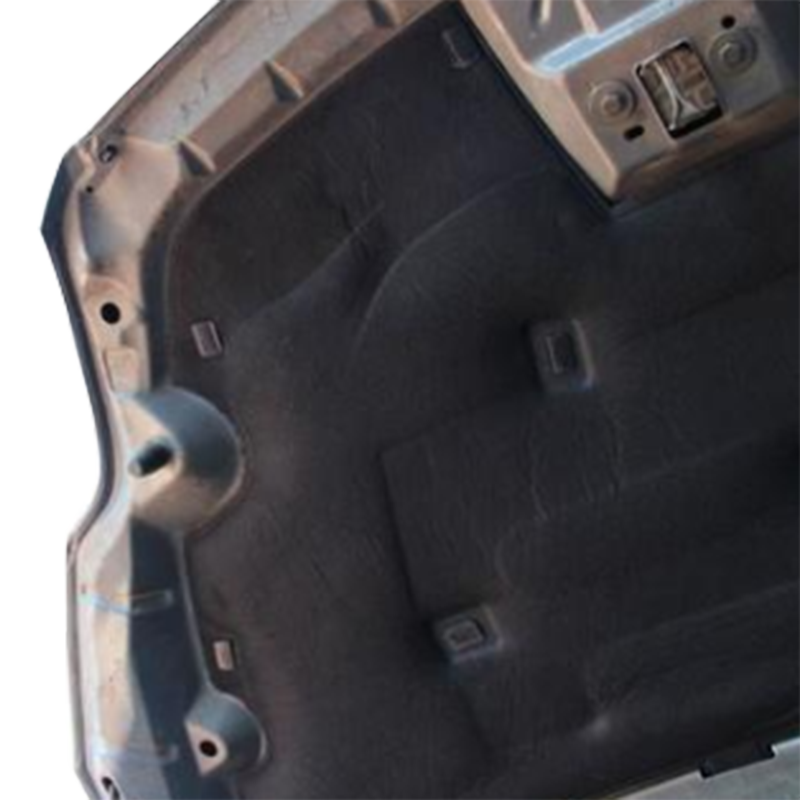
The automotive industry is one of the largest and most technically demanding consumers of aluminum foil fiberglass felt and other noise reduction buffer materials. Modern vehicle buyers place increasing emphasis on interior acoustic comfort as a key quality indicator, and automakers are under simultaneous pressure to reduce vehicle weight for fuel economy and emissions compliance — a combination that makes lightweight, high-performance acoustic and thermal materials critically important in vehicle design.
Aluminum foil fiberglass felt is applied extensively in automotive applications where both heat and sound management are required simultaneously. Under-hood applications include engine compartment liners, firewall insulators, hood inner panel liners, and battery tunnel covers in hybrid and electric vehicles. In these locations, the material's aluminum foil facing reflects radiant heat from the engine or exhaust system away from sensitive wiring, plastic components, and the passenger compartment floor, while the fiberglass felt layer absorbs engine and intake noise that would otherwise propagate into the cabin through the firewall and floor panels.
In electronic equipment applications, the role of noise reduction buffer materials takes on a different character compared to automotive use — the acoustic sources are typically smaller in absolute energy output, but the proximity of sensitive components to both heat sources and vibrating elements makes precise material placement critically important. Aluminum foil fiberglass felt is used in electronic enclosures, power supply units, server racks, industrial control panels, and consumer appliance housings to address the thermal and acoustic challenges created by cooling fans, transformers, inductors, and power switching components.
Cooling fans are the dominant noise source in most electronic equipment, generating broadband aerodynamic noise that radiates from the equipment enclosure and degrades the acoustic environment of office, laboratory, and data center spaces. Lining the internal surfaces of equipment enclosures with aluminum foil fiberglass felt absorbs this fan noise before it can escape through vents and panel gaps, reducing the A-weighted sound pressure level of the equipment and improving compliance with noise emission standards such as ISO 7779 for information technology equipment. The material's thermal insulation properties must be carefully balanced in this context — while some thermal isolation of outer panels from internal heat sources is beneficial for operator comfort and component longevity, excessive insulation of internal surfaces can impede the heat dissipation the cooling system depends upon, requiring careful placement design to deliver acoustic benefit without compromising thermal management.
Industrial environments present the most demanding conditions for noise reduction buffer materials — extreme temperatures, aggressive chemicals, high-amplitude vibration, and continuous duty cycles that place sustained mechanical and thermal stress on any material used for acoustic or thermal management. Aluminum foil fiberglass felt's non-combustible glass fiber core, high-temperature aluminum facing, and resistance to oils and many industrial chemicals make it well suited to these challenging conditions in applications ranging from machinery acoustic enclosures to industrial ductwork insulation.
In industrial machinery applications, aluminum foil fiberglass felt is used to line the interior of acoustic enclosures built around compressors, generators, pumps, and processing equipment to reduce occupational noise exposure in manufacturing facilities. The material is typically installed on the inner surfaces of the enclosure panels, where it absorbs the high-intensity sound generated by the enclosed machine before it can reflect off hard panel surfaces and build up to even higher sound levels through reverberant energy accumulation. Industrial HVAC ductwork is another major application — lining duct interiors with fiberglass felt backed by aluminum foil reduces both the transmission of fan noise through the duct system and the radiation of duct breakout noise from duct surfaces in occupied building spaces.
With a variety of noise reduction and buffer materials available — including aluminum foil fiberglass felt, foam composites, mass-loaded vinyl laminates, and rubber-based damping sheets — selecting the optimal solution for a specific application requires systematic evaluation of the acoustic problem, thermal environment, available installation space, weight budget, and regulatory requirements that govern the finished product.
Specialty Films: CCS, PI, Hot Melt, Laser & PVC Adhesive
Technical Deep Dives: Sourcing the Right Materials for Every Industrial Application
Your email address will not be published. Required fields are marked *
 Self Adhesive Label Material Manufacturers