
 English
 русский
 Español
 عربى
عربى
Product Consultation
Your email address will not be published. Required fields are marked *
Coming From China, Marketing To The World.
Content
Aluminum foil fiberglass felt is a composite thermal and acoustic insulation material constructed by bonding a reflective aluminum foil layer to a fiberglass felt substrate. The fiberglass felt base—produced from randomly oriented, heat-resistant glass fibers—provides the structural body responsible for trapping air pockets and absorbing vibrational energy. The aluminum foil surface laminated onto this base serves as a radiant heat barrier, reflecting infrared radiation away from heat-sensitive components while simultaneously acting as a rigid facing that protects the softer felt core from abrasion and moisture ingress.
What distinguishes this material from simpler foil-faced products is the thickness and density of the fiberglass felt layer. Unlike thin foil-scrim laminates designed purely for vapor barriers, aluminum foil fiberglass felt is engineered with sufficient mass and fiber density to attenuate sound waves across a broad frequency range. This dual functionality—blocking radiant heat transfer on one side while absorbing acoustic energy throughout its core—makes it a uniquely practical solution for environments where both heat and noise must be managed simultaneously.
Understanding the specific performance characteristics of aluminum foil fiberglass felt is essential for selecting the right grade and thickness for a given application. The material's value is derived from four interdependent properties that work together under real operating conditions.
The aluminum foil surface reflects up to 95% of radiant heat, dramatically reducing heat transfer by radiation—the dominant heat transmission mode in high-temperature environments. The fiberglass felt layer beneath further resists conductive heat flow due to the low thermal conductivity of glass fibers (approximately 0.03–0.04 W/m·K). Together, the two layers address both radiation and conduction, yielding a composite thermal resistance far superior to either material alone. Standard grades maintain effective thermal insulation performance at continuous service temperatures up to 250°C, with premium variants engineered for short-term exposure up to 400°C.
The porous, fibrous structure of the felt core is highly effective at converting airborne sound energy into heat through viscous friction as sound waves pass through the fiber matrix. This mechanism provides broadband noise reduction, particularly effective in the mid-to-high frequency range (500 Hz–4,000 Hz) where engine, exhaust, and mechanical equipment noise is most disruptive. When installed as a sound-dampening layer, the material's mass also contributes to blocking low-frequency structure-borne vibration, adding a secondary noise control benefit beyond simple absorption.
Fiberglass, by its nature, does not burn or melt under typical industrial operating temperatures. The glass fiber matrix retains structural integrity at temperatures where organic fiber alternatives—such as polyester felt or foam composites—would shrink, off-gas, or fail entirely. The aluminum foil facing adds a layer of wear resistance at the material's exposed surface, protecting the felt from mechanical abrasion during installation and operation. This combination of high temperature resistance and surface durability extends service life significantly in high-wear environments such as engine bay compartments and industrial duct systems.
The aluminum foil layer forms a passive oxide barrier on its surface that resists attack from most industrial chemicals, oils, and moisture. Fiberglass itself is inherently inert to corrosion, biological degradation, and most solvents. This combination of anti-corrosion properties ensures dimensional stability and performance consistency even in demanding environments such as marine engine rooms, chemical processing facilities, and automotive underbodies exposed to road salts and moisture cycling. Unlike metal-foam or metal-rubber composites, aluminum foil fiberglass felt does not delaminate due to differential thermal expansion under repeated heat cycling.
The automotive industry is one of the primary sectors driving demand for aluminum foil fiberglass felt, owing to the increasingly tight packaging constraints in modern vehicles and the need to manage both cabin noise and thermal loads simultaneously. Key automotive applications include:
Beyond automotive use, aluminum foil fiberglass felt delivers efficient and reliable solutions across a broad range of industrial equipment categories where thermal management and acoustic control are operational priorities.
Aluminum foil fiberglass felt is available in a range of thicknesses, densities, and facing configurations. Selecting the correct specification requires balancing thermal resistance targets, acoustic requirements, available installation space, and operating temperature. The following table summarizes typical product grades and their primary application fit:
| Thickness | Density | Max Temp. | Primary Use |
| 5–10 mm | Low (24–48 kg/m³) | 200°C | Automotive cabin noise, HVAC duct wrap |
| 10–25 mm | Medium (48–96 kg/m³) | 250°C | Industrial pipe insulation, engine bay panels |
| 25–50 mm | High (96–128 kg/m³) | 400°C | Furnace liners, industrial equipment enclosures |
For applications combining both high acoustic performance and elevated temperature resistance, specifying a higher-density felt grade at the required thickness will outperform a thicker low-density product. Where space is the primary constraint—as in automotive floor applications—a thinner, higher-density grade with a reinforced foil facing is the recommended choice.
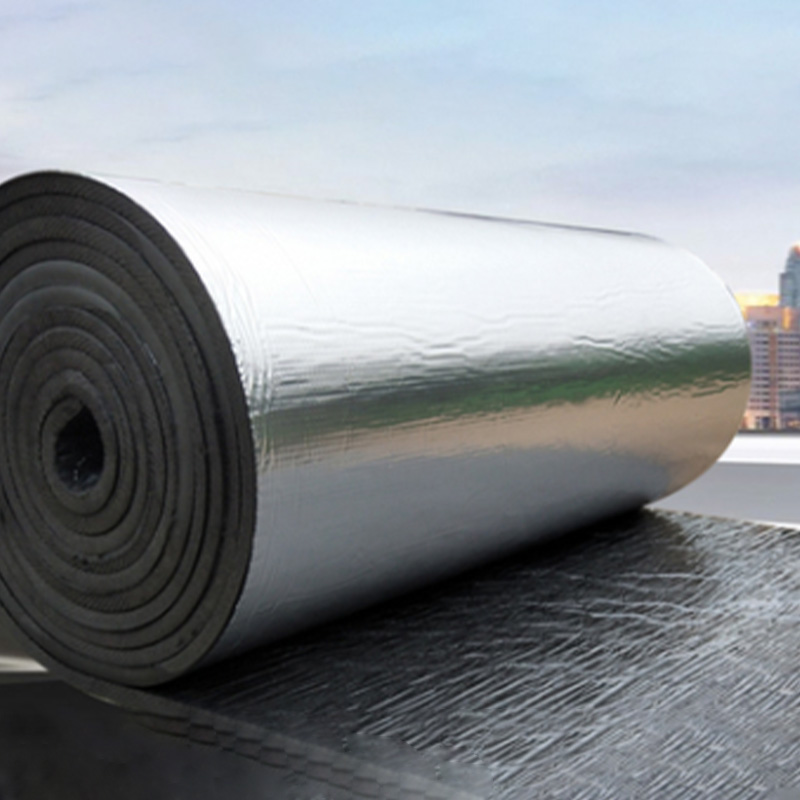
Aluminum foil fiberglass felt can be cut with standard utility knives or shears and shaped to fit complex geometries using simple hand tools. When installing the material, the aluminum foil side should always face the heat source to maximize radiant heat reflection. In automotive installations, self-adhesive backing variants simplify positioning and eliminate the need for mechanical fasteners in smooth, flat surfaces.
When handling the material, light protective gloves are recommended to prevent skin irritation from loose glass fibers at cut edges. Seams between panels should be lapped by a minimum of 50 mm and sealed with aluminum foil tape to maintain vapor barrier continuity and prevent thermal bridging at joints. In high-vibration environments, mechanical fastening with clips or standoffs should supplement adhesive bonding to prevent delamination over time. Proper installation ensures that the material's durability and anti-corrosion properties translate into a long and maintenance-free service life in the field.
Guide to Functional Composite Materials: Applications & Selection Tips
Functional Composite Materials & Tapes Drive Innovation in Marine, Electronic, and Industrial Applications
Your email address will not be published. Required fields are marked *
 Self Adhesive Label Material Manufacturers