
 English
 русский
 Español
 عربى
عربى
Product Consultation
Your email address will not be published. Required fields are marked *

Coming From China, Marketing To The World.
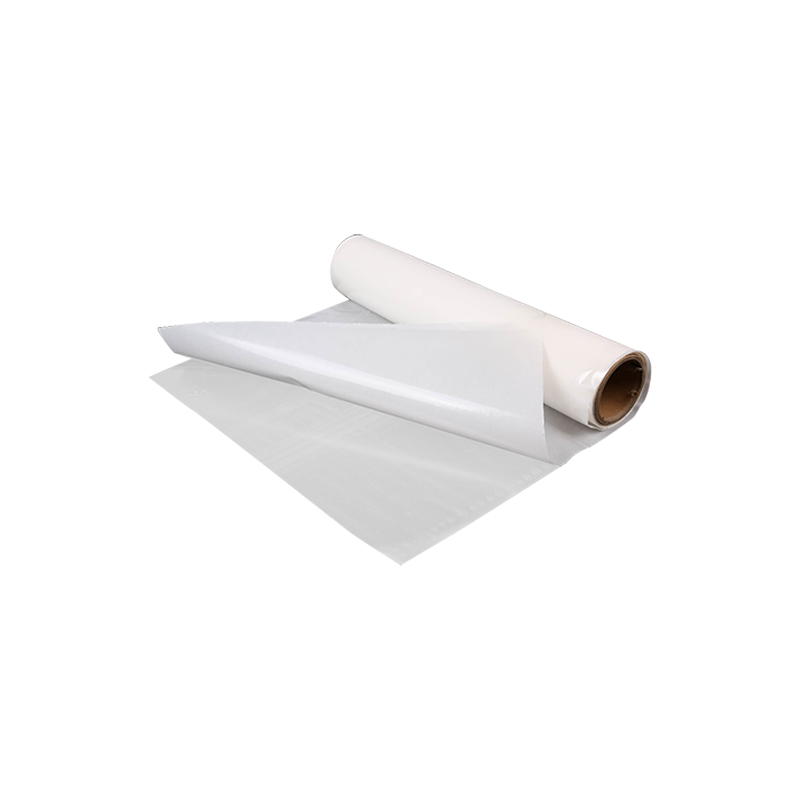
A hot melt adhesive film is a thermoplastic bonding layer that is solid at room temperature, melts into a flowable liquid when heated, and then rapidly re-solidifies upon cooling to create a structural or semi-structural bond. The defining characteristic that separates it from liquid adhesives and pressure-sensitive tapes is that it is 100% solid, solvent-free, and requires no curing or drying time. The bond forms purely through a thermal phase change. This makes hot melt films uniquely suited to high-speed lamination processes, sensitive substrates that cannot tolerate solvents, and applications demanding uniform, void-free bond lines with precise thickness control. The most common base polymers are ethylene-vinyl acetate, polyolefin, thermoplastic polyurethane, and polyamide, each engineered for a specific bonding temperature range and substrate compatibility profile.
Content
The hot melt film bonding process is a three-stage thermal cycle. First, the film is heated past its melting point, typically to a temperature between 80°C and 180°C depending on the polymer type. At this temperature, the viscosity drops dramatically—often to values in the range of 5,000 to 50,000 centipoise—allowing the molten adhesive to flow and wet the substrate surface. Second, the molten adhesive penetrates surface irregularities, pores, and textile fiber bundles, creating mechanical interlocking. Third, as heat is removed, the polymer re-crystallizes or vitrifies, trapping the interlocked structure and transferring mechanical load across the bonded interface.
What distinguishes hot melt films from other adhesive forms is the uniform, pre-formed thickness. The film is manufactured to a precise gauge, typically from 20 to 200 microns, and this gauge is maintained across the entire bond line. There are no thin spots, no voids from solvent evaporation, and no squeeze-out at the edges. For applications like textile lamination or membrane bonding in outdoor apparel, this consistency translates directly to guaranteed water-tight seals and predictable breathability values.
The polymer backbone determines every critical performance parameter: the softening point, the chemical resistance, the flexibility at low temperature, and the substrate compatibility. Selecting the wrong chemistry for the end-use environment is the most common cause of adhesive failure. The table below maps the four major hot melt film types to their typical application envelopes.
| Polymer Type | Typical Melting Range | Key Strength | Primary Limitation | Common Applications |
|---|---|---|---|---|
| EVA (Ethylene-Vinyl Acetate) | 65-95°C | Broad adhesion, low cost, fast set | Poor solvent resistance, limited high-temp use | Footwear, fabric lamination, packaging |
| Polyolefin (PP/PE-based) | 110-150°C | Excellent chemical resistance, lightweight | Requires surface treatment on many substrates | Automotive interior parts, medical packaging |
| TPU (Thermoplastic Polyurethane) | 100-160°C | High elasticity, abrasion resistance, wash durable | Higher cost, moisture-sensitive before processing | Seamless apparel, outdoor gear, medical garments |
| Polyamide (PA / Nylon) | 110-160°C | Heat resistance, dry-cleanable, stiff bond | Rigid bond line, can feel stiff against skin | Garment interlinings, automotive upholstery |
| PES (Co-Polyester) | 120-160°C | Excellent adhesion to PET, wash-fast | High processing temperature, narrow substrate range | Polyester fabric bonding, industrial filtration |
Within a single polymer family, performance is tuned by adjusting the Melt Flow Index (MFI). The MFI measures how many grams of polymer flow through a standardized die in 10 minutes under a specified temperature and weight, per ASTM D1238. A high MFI film, with values above 50 g/10min, is fluid and penetrates deeply into porous substrates like woven textiles, creating a strong mechanical bond. A low MFI film, below 10 g/10min, remains more viscous and stays on the surface, forming a gap-filling layer that works well for smooth, non-porous substrates like metal or film lamination.
Open time—the window between the film melting and the bond strength beginning to build through cooling—is another process-critical parameter. For manual lay-up operations, a longer open time of 20 to 60 seconds allows the operator to reposition parts. For high-speed continuous lamination, a short open time under 5 seconds is desirable because it enables immediate downstream processing. The open time is controlled by the width of the melting peak in the polymer's differential scanning calorimetry curve; a sharp, narrow melting peak produces a short open time, while a broader melting range extends it.
Hot melt adhesive film is activated by the simultaneous application of heat and pressure. The specific machinery depends on the production volume and the geometry of the parts being bonded. Each method delivers a different thermal profile, and the film grade must be matched to the heating method to achieve full bond strength without thermal degradation.
This is the most common industrial method. The film is sandwiched between the two substrates and passed through a heated nip or a continuous belt press. Temperature, pressure, and dwell time are precisely controlled. Belt laminators can run continuously at speeds exceeding 10 meters per minute for thin EVA films bonding fabric layers. The critical parameter is the temperature at the bond line, not just the set point of the heater. The thermal resistance of the substrates means the film temperature lags behind the platen temperature. A thermocouple embedded in a test lamination run is the most reliable way to calibrate the actual processing window.
For cut parts, shoe soles, or garment interlinings, the film is pre-cut to shape and activated in a heated platen press. The press delivers high pressure—up to 3 to 5 bar (0.3 to 0.5 MPa)—which forces the molten film into intimate contact with the substrate. This method is the standard for footwear toe caps and heel counters, where a pre-cut polyamide or EVA film insert is placed between the upper material and the reinforcing component and fused in a single press cycle lasting 15 to 45 seconds.
In technical outerwear and medical protective garments, hot melt films are slit into narrow tapes and applied over sewn seams by a hot-air tape sealing machine. The machine directs a jet of heated air at the tape and the fabric simultaneously, melting the film immediately before a pressure roller beds it into the seam. TPU is the dominant chemistry for this application because the resulting sealed seam must survive at least 40 wash cycles at 60°C without leaking, while maintaining the flexibility to stretch with the fabric.
The bond to the substrate forms through a combination of mechanical interlocking and specific adhesion—polar interactions, hydrogen bonding, or, in some reactive formulations, covalent bonding. The general rule is that the hot melt film must have a surface energy lower than the substrate surface energy at the moment of bonding. Polyolefin films, with their intrinsically low surface energy of approximately 30 dynes/cm, bond poorly to anything unless the substrate is pre-treated by corona discharge, plasma, or flame treatment to raise its surface energy above 38 dynes/cm.
TPU and EVA films are more forgiving due to their polar acetate and urethane groups, which form hydrogen bonds with hydroxyl and carbonyl groups on substrates like leather, cotton, and polyurethane-coated fabrics. However, contamination is the enemy of all hot melt bonding. Even fingerprint oils can create a weak boundary layer that causes apparent adhesion that fails under load. A wipe with isopropyl alcohol and a clean, lint-free cloth immediately before lamination is the minimum surface preparation for any critical bond.
Hot melt adhesive films are chemically stable in storage compared to liquid reactive adhesives, but they are not immune to aging. The primary degradation mechanisms are oxidation of the polymer backbone—particularly in unsaturated EVA grades—and moisture absorption, especially by TPU and polyamide. TPU films in particular are hygroscopic: they absorb atmospheric moisture that, when the film is heated above 100°C, vaporizes and creates bubbles, voids, and a weak, frothy bond line. Unopened, moisture-barrier-packaged TPU film has a shelf life of typically 12 months from the date of manufacture. Once opened, the film should be used within 24 to 48 hours unless stored in a dry cabinet with a dew point below -30°C.
Polyolefin films are the most storage-stable, resisting both oxidation and moisture uptake. Polyamide films resist oxidation well but absorb moisture even more aggressively than TPU. A polyamide film exposed to ambient humidity for a day can contain enough water to visibly foam during activation. Pre-drying the film roll in a desiccant dryer at 60°C for 4 to 6 hours before processing is a standard procedure in high-reliability applications like automotive interior bonding, where a failed seam is a warranty claim.
Validating a hot melt film bond requires more than a subjective peel test. The following tests provide quantitative data that can be tracked statistically in production.
The hot melt adhesive film industry is responding to regulatory pressure on single-use plastics and landfill waste with several technology shifts. Bio-based EVA films, where the ethylene component is derived from sugar-cane ethanol rather than petroleum, are now commercially available with properties essentially identical to petrochemical grades. More significantly, the development of washable, debondable adhesive films is gaining traction in textile recycling. These films bond strongly through the garment's useful life but are formulated to lose adhesion when exposed to a specific trigger condition—a particular pH, a temperature spike above normal wash temperatures, or a chemical bath—allowing the bonded layers to be separated for recycling. The European Union's Circular Economy Action Plan is a major driver of this research, as bonded multi-material textile laminates are currently non-recyclable and headed for landfill or incineration.
PVC Adhesive Film: Applications, Benefits & Guide
Synthetic Paper Labels for Frozen Food: Flexo & UV Inkjet Printing
Your email address will not be published. Required fields are marked *
 Self Adhesive Label Material Manufacturers