
 English
 русский
 Español
 عربى
عربى
Product Consultation
Your email address will not be published. Required fields are marked *

Coming From China, Marketing To The World.
It usually begins with a rejected roll. A buyer approves a sample of white PVC adhesive film, the first production roll prints cleanly, but the third roll shows patchy adhesion after die-cutting. The adhesive formula did not change. The coating line drifted.
Roll coating technologies decide how uniformly a functional coating is applied to a flexible substrate. Everything a material specifier eventually measures — adhesion, opacity, flame retardance, die-cutting behavior, ageing resistance — is fixed on the coating line before the product is rewound into its final roll.
Core conclusion: there is no universal best coating method. Slot-die and gravure give the tightest tolerances for precision films; hot-melt coating applies solvent-free adhesive layers at high speed; knife-over-roll remains a practical option for thick, less demanding coatings. Match the method to the function — and verify the supplier's coating data, not just the sample.
Content
A roll coating line is a continuous system that meters a liquid or molten coating onto a flexible substrate. The substrate unwinds, passes through a coating head, travels through a drying or curing zone, and is rewound. The critical difference between technologies lies in how the coating is metered.
Pre-metered methods set the coating thickness before the fluid touches the web. Slot-die, gravure, and curtain coating belong to this group, and they deliver the tightest tolerances. Self-metered methods apply an excess and then remove it with a blade, rod, or roll nip. Knife-over-roll and metering-rod coating follow this principle — simpler and cheaper, but with wider variation.
Slot-die coating
A pre-metered method that extrudes a precise fluid volume through a narrow die onto the web. Typical tolerance is ±2–3%, and it handles viscosity up to tens of thousands of mPa·s. Common for pressure-sensitive adhesives, battery films, and optical layers.
Gravure coating
An engraved cylinder picks up coating from a pan and transfers it directly to the substrate. Excellent for low-viscosity solvent-based systems, with tolerance around ±2%. Used in thermal paper, synthetic paper, and label face stocks.
Hot-melt coating
A 100% solid adhesive is melted and applied at elevated temperature, then cooled to form the final bond. No drying oven is required, so line speed rises and energy use falls. This is the route behind products such as the dual-silicone hot-melt adhesive film used in industrial lamination.
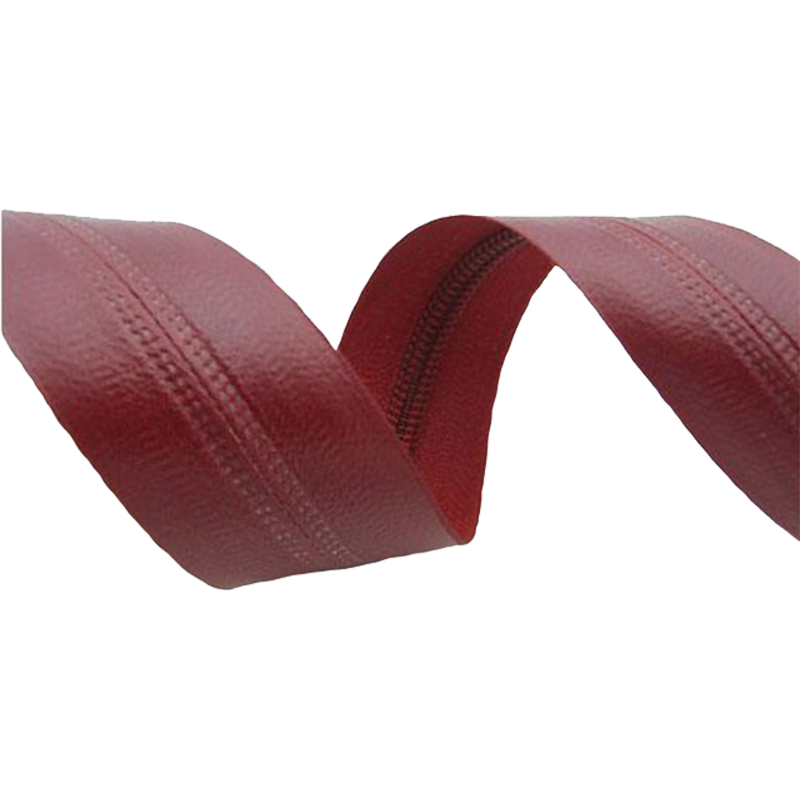 Wholesale YH-TFTR 50# Dual-Silicone Hot Melt Adhesive Film Suppliers, Company - Yanhe is China wholesale YH-TFTR 50# Dual-Silicone Hot Melt Adhesive Film suppliers and YH-TFTR 50# Dual-Silicone Hot Melt Adhesive Film ...View Product →
Knife-over-roll coating
A knife gap controls how much coating remains on the web. Simple, robust, and capable of heavy coat weights, but tolerance is wider at ±5–10%. Suitable for mastics, sound-damping layers, and other forgiving applications.
The comparison below shows typical operating windows. Actual values shift with coating chemistry, substrate, and line configuration, so treat them as planning data rather than guarantees.
Read the tolerance column carefully. A ±2% tolerance on a 50 µm coating means a ±1 µm window. At ±10%, the same coating can vary by ±5 µm — enough to turn a flame-retardant film from a clear pass into a borderline failure in a UL 94 VTM-0 test.
Roll-coated films reach nearly every industrial sector, but a few applications dominate the volume. The split below is a practical view of where coated functional films are consumed today.
Label materials remain the largest outlet. Face stocks such as thermal paper, pearlescent synthetic paper, and PVC adhesive film receive their adhesive and top coatings on roll lines. A material like our pure white PVC adhesive film has to hold a consistent coating so that printing, die-cutting, and dispensing all run without surprises.
 Wholesale SVLW 80#E(W) Pure White Base PVC Adhesive Film Suppliers, Company - AnYanhe is China wholesale SVLW 80#E(W) Pure White Base PVC Adhesive Film suppliers and SVLW 80#E(W) Pure White Base PVC Adhesive Film comp...View Product →
The fastest-moving segment is energy storage. Functional films for battery packs — aerogel flame-retardant packaging films, CCS hot-pressing films, and PI thermosetting films — depend on coating technologies that maintain tight tolerances while delivering flame retardance and heat resistance. The white aerogel flame-retardant packaging film rated VTM-0 is a good example of a roll-coated safety layer that must not develop thin spots.
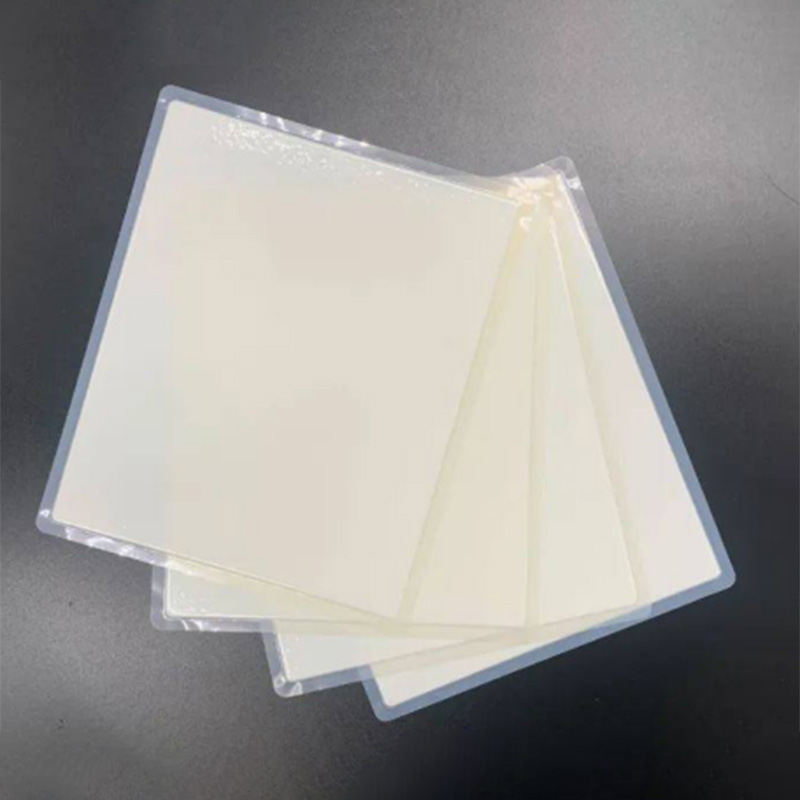 Wholesale YH-TFW 36#+14 VTM-0 White Aerogel Flame Retardant Packaging Film SupplYanhe is China wholesale YH-TFW 36#+14 VTM-0 White Aerogel Flame Retardant Packaging Film suppliers and YH-TFW 36#+14 VTM-0 White Aerogel...View Product →
Industrial tapes and composites round out the picture. Double-sided tapes, hot-melt films, and aluminum-foil fiberglass felts combine coating and lamination to deliver adhesion, insulation, and mechanical strength in a single construction.
Brochures quote speed and thickness. What they rarely show is coat-weight uniformity — the variation in coating mass across the web width and along its length. This number controls how the finished material behaves on a customer's line.
The chart below shows typical coat-weight variation (CV%) by method; lower is better.
A slot-die line running at 1.5% CV on a 25 g/m² adhesive coat stays within roughly ±0.4 g/m². A knife-over-roll line at 8% CV can drift by ±2 g/m² — enough to change peel strength noticeably or create mottling in a printed label. For sensitive applications, request coat-weight data from several positions across the roll width, not just the leading edge.
At our coating workshop, coat weight is measured routinely and tracked against the batch specification, so a customer ordering 5,000 meters gets the same coating profile as the approved sample.
Start with the product requirement, not the coating machine. The sequence below mirrors the approach our engineers use when a customer brings a new surface or a new function to the table.
Name the required performance: adhesion level, removability, flame retardance, temperature resistance, printability, or resistance to water and chemicals. The function dictates the coating family — acrylic or rubber-based adhesive, hot melt, silicone release, or a functional topcoat.
Tighter coat-weight tolerances raise production cost. A simple permanent label adhesive may not need slot-die precision; a battery safety film does. Define the tolerance you can live with before comparing quotes.
Surface energy, roughness, and heat resistance of the substrate — PET, PVC, synthetic paper, fiberglass cloth, or aerogel — all constrain the process. The coating must wet the web evenly and survive the drying or curing profile without deformation.
No datasheet replaces a pilot test. A custom coating and laminating trial reveals how the material behaves in printing, die-cutting, dispensing, or thermal assembly. Evaluate peel adhesion, ageing, and environmental resistance before approving the material.
Inspect how rolls are maintained, how coat weight is recorded, and how samples are tested. A UL-listed adhesive or a VTM-0 flame rating is only meaningful if the production line can hold the conditions under which the certificate was issued.
Roll coating is mechanical, and mechanical wear shows up on the web. Worn roll surfaces, misaligned nips, dried coating build-up, and bearing play create streaks, skips, and banding. A serious producer keeps a documented maintenance schedule. In our coating workshop, rolls are cleaned, inspected, and calibrated on a fixed cycle so quality does not drift between orders.
Buyers in electronics and battery supply chains should ask for UL-listed adhesives, VTM-0 or equivalent flame ratings, and RoHS or REACH documentation. A supplier that lists these on a datasheet but cannot produce the test record is a risk. Ask for the record, and if possible, witness a test in the lab.
Roll coating technologies are the bridge between a chemical formulation and a reliable industrial material. The method chosen on a production line decides whether a label holds in a cold warehouse, whether a battery film resists flame, and whether a tape performs for the life of an assembly. Buyers who understand the process behind the material are the ones who receive consistent rolls, order after order. That is the standard Anhui Yanhe New Material holds to on every roll we ship.
High Temperature Silicone Tape: Temperature Ratings, Applications, and How to Select
Blown Polyurethane Films vs Thermoplastic Polyurethane (TPU) Films: How to Choose
Your email address will not be published. Required fields are marked *
 Self Adhesive Label Material Manufacturers