
 English
 русский
 Español
 عربى
عربى
Product Consultation
Your email address will not be published. Required fields are marked *
Coming From China, Marketing To The World.
Content
PI thermosetting film is a polyimide-based functional film designed to undergo irreversible crosslinking during thermal curing. Unlike thermoplastic polyimide films that can soften repeatedly under heat, thermosetting PI films form a stable three-dimensional network structure after curing. This molecular structure gives the film strong thermal stability, dimensional control, and long-term reliability, which are critical in advanced electronic assemblies where heat, pressure, and electrical stress coexist.
The film is typically supplied in a partially cured or B-stage state, allowing it to be laminated, bonded, or positioned before final heat treatment. Once cured, it becomes insoluble and infusible, providing stable mechanical and electrical performance throughout the service life of the electronic device.
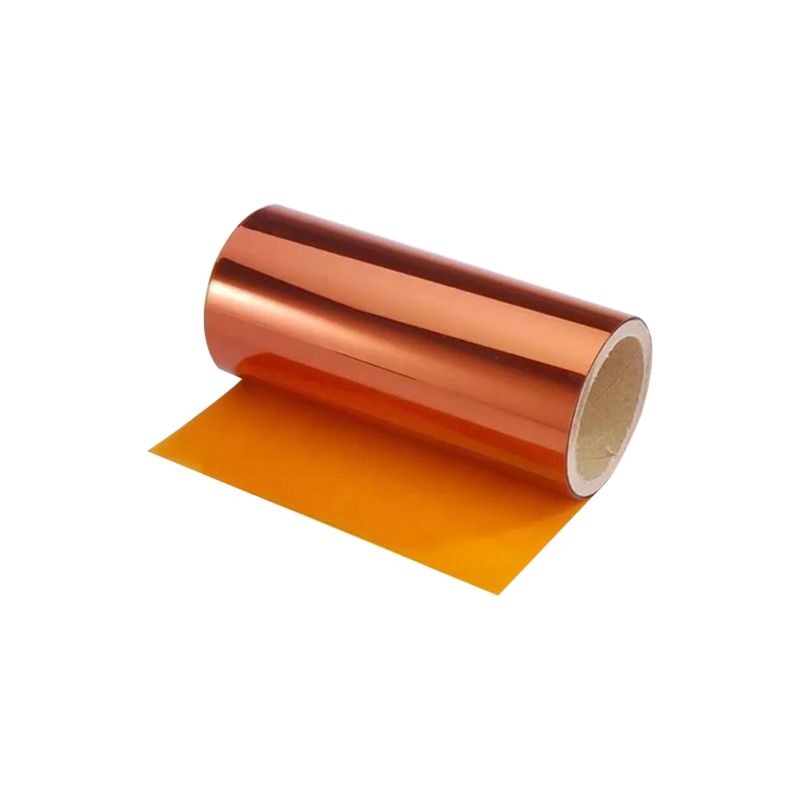
The thermosetting mechanism of PI film is central to its role in advanced electronics. During curing, chemical crosslinking reactions occur within the polymer chains, transforming the film from a processable state into a rigid, heat-resistant layer. This transition supports precise bonding and structural fixation of electronic components.
These processing features allow PI thermosetting film to be integrated into multi-layer electronic structures without causing misalignment or excessive stress on sensitive components.
Electrical insulation is one of the primary reasons PI thermosetting film is adopted in advanced electronic systems. After curing, the crosslinked polyimide structure maintains stable dielectric properties even under elevated temperatures and long-term electrical loading.
The film supports high breakdown strength and consistent insulation resistance, which is important in compact electronic assemblies where conductor spacing continues to shrink. Its insulation performance remains reliable in environments involving thermal cycling, making it suitable for high-density interconnects and power-related electronic modules.
Advanced electronics often operate under high temperatures generated by miniaturized components and increased power density. PI thermosetting film supports these conditions through its inherent thermal stability and resistance to thermal deformation.
Once cured, the film retains its mechanical integrity and insulation function across a wide temperature range. This stability reduces the risk of delamination, cracking, or electrical failure during prolonged operation or repeated thermal cycling.
In semiconductor packaging, PI thermosetting film is frequently used as a bonding, insulation, or stress-buffer layer. Its controlled curing behavior allows precise placement between chips, substrates, and lead frames, contributing to structural stability and electrical isolation.
The film supports advanced packaging formats such as multi-chip modules and high-density interposers, where thin, uniform, and reliable insulating layers are required to manage both electrical performance and mechanical stress.
PI thermosetting film also plays an important role in flexible and high-density electronic designs. Its ability to combine flexibility before curing with rigidity after curing supports complex manufacturing processes while meeting final product performance requirements.
When compared with thermoplastic films or conventional adhesive films, PI thermosetting film offers a different balance of processability and final performance. The table below highlights typical functional differences that influence material selection in advanced electronics.
| Material Type | Curing Behavior | Thermal Stability | Rework Capability |
| PI Thermosetting Film | Irreversible crosslinking | High | Limited after curing |
| Thermoplastic PI Film | Softening and re-melting | Moderate | Possible |
The support that PI thermosetting film provides to advanced electronics comes from the combination of stable insulation, strong adhesion, and long-term thermal resistance. These characteristics directly address the reliability challenges faced by modern electronic systems operating under high power density and miniaturized designs.
By forming a stable and permanent polymer network after curing, the film helps maintain electrical and structural performance throughout the lifecycle of advanced electronic products, supporting consistent operation in demanding industrial and electronic environments.
Aluminum Foil Fiberglass Felt in HVAC Duct and Pipe Insulation
Washable Laser Film Guide: Features, Applications, and Performance
Your email address will not be published. Required fields are marked *
 Self Adhesive Label Material Manufacturers