
 English
 русский
 Español
 عربى
عربى
Product Consultation
Your email address will not be published. Required fields are marked *

Coming From China, Marketing To The World.
Content
PET foam cushioning is a lightweight, flexible buffer material made from polyethylene terephthalate (PET) resin that has been expanded into a fine closed-cell or semi-open-cell foam structure. Unlike the rigid, high-density PET foam used as structural sandwich-panel cores in construction or marine applications, cushioning-grade PET foam is engineered for softness, resilience, and impact energy absorption — making it the material of choice wherever fragile components need repeatable protection against shock, vibration, and surface abrasion.
Composite PET foam cushioning takes this a step further by laminating the PET foam layer with complementary materials — such as aluminum foil, non-woven fabric, or adhesive films — to add thermal management, moisture resistance, or self-adhesive functionality in a single convertible sheet. This composite construction is why PET composite foam has become a standard specification in consumer electronics assembly, new-energy battery modules, and automotive interior components.
When a mechanical shock or vibration reaches a PET foam cushion, two complementary mechanisms dissipate the energy before it reaches the protected component. The first is cell compression: the foam's closed cells deform elastically under load, converting kinetic energy into heat and distributing the force across a larger contact area. The second is viscoelastic damping: the polymer matrix of PET foam exhibits time-dependent deformation, meaning it continues to absorb energy even after peak impact, smoothing out vibration waveforms that would otherwise couple into circuit boards or battery cells.
The efficiency of both mechanisms depends on foam density and cell uniformity. Lower-density PET foam (softer grades) excels at cushioning fragile, low-mass items against repeated light impacts, such as the battery pack rattling inside a laptop chassis. Higher-density grades provide firmer, more controlled compression suitable for heavier components with higher drop-height requirements. Specifying the correct density for a given application is the single most important step in cushioning design.
Several intrinsic properties of PET foam make it particularly well-suited for precision cushioning applications compared with conventional foam materials like EPE (expanded polyethylene) or EPS (expanded polystyrene).
Consumer electronics represents the largest single end-use segment for PET foam cushioning, driven by the industry's demanding combination of thin profiles, fragile components, and high-volume automated assembly. PET composite foam is used at multiple levels of the electronics Bill of Materials.
At the component level, thin PET foam pads — often with a pressure-sensitive adhesive backing for peel-and-stick installation — are placed between PCB assemblies and metal chassis to prevent direct metal-to-metal contact that would transmit vibration and risk cracking solder joints. Battery cells within laptop and smartphone battery packs benefit from PET foam inter-cell pads that both cushion mechanical shock and provide a degree of thermal separation. Laptop battery noise reduction label stickers combining PET foam with printed label functionality are a practical example of how this material serves dual roles in a single die-cut part.
At the product packaging level, PET foam inserts and trays in retail and logistics packaging protect finished electronics during drop events. A typical cushioning system for a smartphone or tablet positions PET foam pads at the device corners — statistically the highest-stress zones during a one-meter drop — absorbing peak deceleration forces and limiting the transmitted G-load to the display assembly below its fracture threshold.
| Component / Location | Cushioning Function | Additional Benefit |
|---|---|---|
| Battery inter-cell pads | Shock absorption, cell separation | Thermal buffer, BSR reduction |
| PCB-to-chassis spacers | Vibration isolation | Prevents solder joint fatigue |
| Display module backing | Impact distribution | Light blocking, surface protection |
| Hard disk drive mounts | Vibration damping | Reduces read/write errors |
| Retail packaging inserts | Drop-height cushioning | Lightweight, recyclable |
Product designers choosing a cushioning material routinely compare PET foam against EPE (expanded polyethylene), EPS (expanded polystyrene), and polyurethane (PU) foam. Each material has its niche, but PET foam offers a distinct combination of properties that justify its specification in demanding applications.
Compared with EPE foam, PET foam offers superior heat resistance and a smoother, harder surface that resists particle shedding — advantages that matter greatly in electronics and battery manufacturing environments. EPE foam, while cheaper, permanently deforms when exposed to temperatures above 60 °C and generates fine polyethylene particles that can contaminate component surfaces.
Compared with EPS foam, PET foam is far more resilient and does not fracture under repeated compression cycles. EPS is brittle and suitable mainly for single-use transit packaging, whereas PET foam can sustain thousands of compression cycles without loss of performance — essential for reusable packaging systems and in-product cushioning designed to last the full product lifetime.
Compared with PU foam, PET foam provides better dimensional stability at elevated temperatures and does not yellow or degrade when exposed to UV light or mild solvents. PU foam offers excellent energy absorption at very low densities but exhibits higher creep under sustained load, which can allow component movement to develop over time in long-service-life products.
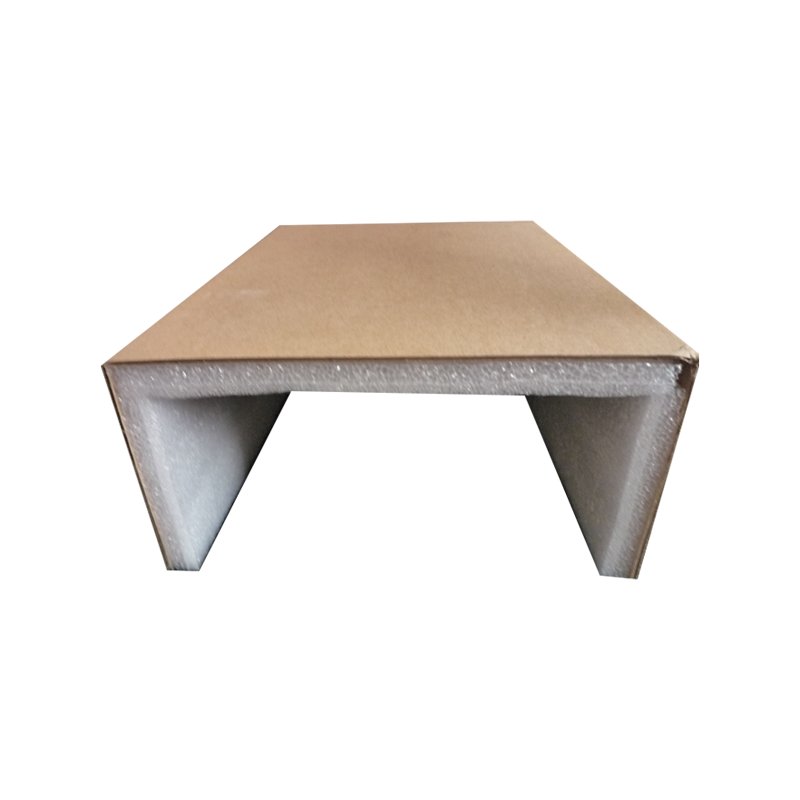
Translating application requirements into a PET foam specification involves answering several practical questions about the end-use environment and performance targets.
Working closely with a materials supplier experienced in precision foam conversion ensures that the final PET foam cushioning part meets both the mechanical performance targets and the production efficiency requirements of high-volume electronics or automotive assembly lines.
Thermal Paper Rolls for Barcode Label Printing: What You Need to Know
Anhui Yanhe Launches HAF+TFT+GF Aluminum Foil Fiberglass Felt for Thermal and Acoustic Applications
Your email address will not be published. Required fields are marked *
 Self Adhesive Label Material Manufacturers