
 English
 русский
 Español
 عربى
عربى
Product Consultation
Your email address will not be published. Required fields are marked *
Coming From China, Marketing To The World.
Content
Consider a packaging line applying barcode labels to cardboard boxes at 200 pieces per minute. The label has to grip instantly, resist peeling during handling, and stay legible through a cold chain. That is the territory where rubber-based adhesives have been the workhorse for decades. They form a strong pressure-sensitive bond in the fraction of a second between application and the next mechanical action, and they do it at a cost that makes them practical for high-volume manufacturing.
Rubber-based adhesives are elastomeric formulations built on natural or synthetic rubber, tackifying resins, and stabilizers. Their defining trait is high initial tack: they bond immediately under light pressure, without heat, moisture, or extended curing. For most labels, tapes, and functional films used in everyday logistics and industrial assembly, that combination of speed, strength, and economy is difficult to replace.
A rubber-based adhesive typically contains 30-50% elastomer, 20-50% tackifying resin, and smaller amounts of plasticizers, antioxidants, and fillers. The elastomer supplies elasticity and cohesion; the resin lowers the softening point and creates the sticky feel; antioxidants protect against oxidation and discoloration; fillers adjust color, flame retardancy, or cost.
The ratio of elastomer to resin is the most important design lever. More resin raises tack but lowers cohesive strength, while more elastomer does the opposite. Commercial formulations are tuned to land on a specific balance for the intended substrate and service life.
The bond is physical rather than chemical. When the adhesive is pressed onto a substrate, it flows into microscopic surface irregularities and forms intimate contact through van der Waals forces. Because no solvent evaporation or chemical crosslinking is required, the bond forms almost instantly.
Three measured properties describe its behavior: tack, the resistance to separation immediately after contact; peel, the force needed to pull the adhesive away; and shear, the resistance to sliding under a sustained load. A good rubber-based formulation balances all three for the target application.
Both natural and synthetic elastomers produce functional pressure-sensitive adhesives, but the performance profile differs in ways that directly affect product selection.
| Property | Natural Rubber | Synthetic Rubber (SBR type) |
|---|---|---|
| Initial tack | Excellent | Good |
| Cohesive strength | High | Moderate to high |
| Heat resistance | Moderate, up to about 80°C | Better than natural rubber |
| UV and oxidation resistance | Weak without additives | Improved with stabilizers |
| Relative cost | Moderate | Generally lower |
| Common applications | General tapes and labels | Packaging and industrial tapes |
Natural rubber delivers outstanding tack and peel adhesion, especially on low-energy surfaces such as polyethylene and polypropylene. Its main weakness is degradation from heat, ultraviolet light, and oxygen. Formulators add antioxidants, but natural-rubber systems are best reserved for indoor or protected environments where aging demands are modest.
Synthetic rubbers such as styrene-butadiene (SBR), polybutadiene, and butyl rubber offer more consistent batch-to-batch performance and better resistance to heat and aging. They can be formulated to emphasize specific properties, such as higher shear strength for industrial tapes or improved low-temperature flexibility for cold-chain labels.
Solvent systems dissolve the rubber in organic solvents to produce a thin, uniform coating. They offer excellent adhesion and fast drying. The trade-off is solvent handling, recovery, and strict environmental control, which raises both capital and operating costs.
Hot-melt systems apply the adhesive in molten form and develop bond strength as it cools. They contain no solvent, coat at high speed, and are the standard for thermal paper labels and packaging tapes. When a pre-formed adhesive layer is preferable to a wet coating, a hot-melt adhesive film performs the same role in dry form; the YHTFTR-50 dual-silicone hot-melt adhesive film is one example of how rubber-based hot-melt chemistry can be delivered as a ready-to-laminate film. For a closer look at how these films behave in production, the hot-melt adhesive film guide reviews types, applications, and processing details.
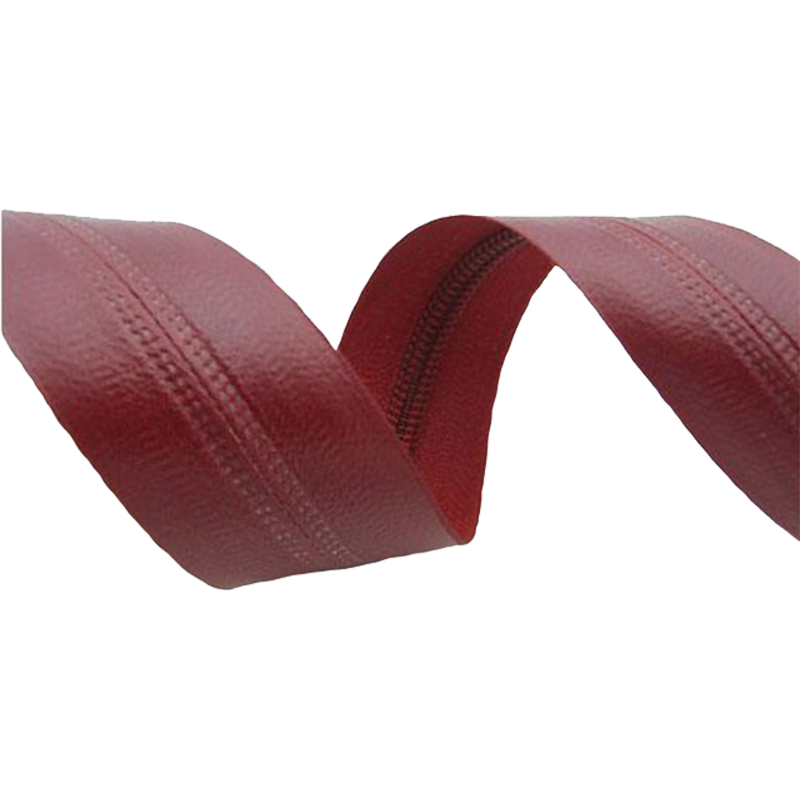 Wholesale YH-TFTR 50# Dual-Silicone Hot Melt Adhesive Film Suppliers, Company - Yanhe is China wholesale YH-TFTR 50# Dual-Silicone Hot Melt Adhesive Film suppliers and YH-TFTR 50# Dual-Silicone Hot Melt Adhesive Film ...View Product →
Water-based emulsions are the most environmentally friendly option, with low volatile organic compound content. They require careful drying and generally show lower water resistance than solvent or hot-melt systems, so they are chosen when emission limits outweigh extreme performance demands.
Rubber-based adhesives have clear boundaries, and ignoring them is a common source of field failures. Continuous service temperature typically ranges from about -20°C to 100°C, depending on formulation. Above that range, softening causes creep and edge lifting.
Prolonged UV exposure causes yellowing and brittleness, which is a concern for white labels and clear tapes. Plasticizers migrating from flexible PVC parts can soften the adhesive and change tack, causing labels to slide or tapes to leave residue. Oxidation gradually hardens the bond line and reduces peel strength. Each of these failure modes shows up differently in the field: softened labels peeling from cartons in warm trucks, brittle tape edges cracking after months on a warehouse shelf, or residue left on parts after tape removal. For automotive, battery, or long-life outdoor applications, these limits are the main reason designers choose acrylic or silicone systems instead. Identifying them early in material selection prevents expensive production changes later.
Pressure-sensitive labels are the largest application segment for rubber-based adhesives. Hot-melt rubber coatings on thermal paper produce labels that stick immediately to cardboard, plastic, and painted surfaces. In logistics, cold-chain food, and retail barcode printing, the combination of instant tack and low cost makes rubber-based hot-melt labels the default choice.
Because hot-melt coatings are applied without solvent, they support the higher line speeds typical of label converting. The three-proof hot-glue thermal paper uses this adhesive family to deliver labels that resist water, oil, and rubbing while maintaining print quality.
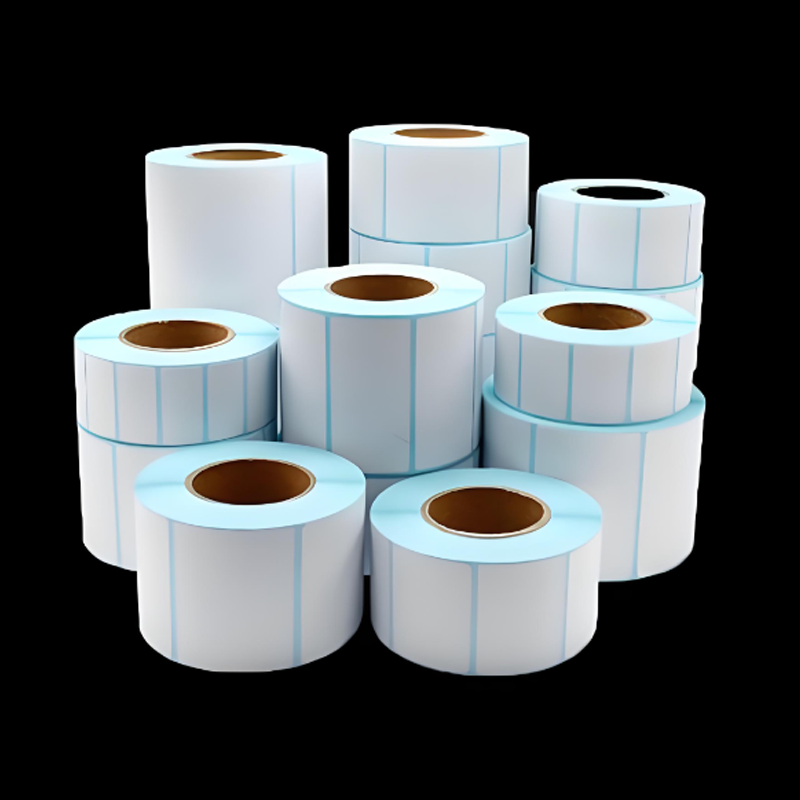 Wholesale R-HRM-3F 3-Proof Hot Glue Grid Base Thermal Paper Suppliers, Company -Yanhe is China wholesale R-HRM-3F 3-Proof Hot Glue Grid Base Thermal Paper suppliers and R-HRM-3F 3-Proof Hot Glue Grid Base Thermal Pape...View Product →
Double-sided tapes translate rubber-based adhesive performance into practical assembly tools. A carrier film coated on both sides with a rubber-based adhesive can mount nameplates, bond cushioning foams, or temporarily hold components in place. The 140g yellow-base removable double-sided adhesive tape is a good example: its rubber-based layers provide firm initial holding power, while the removable construction allows repositioning during installation.
 Wholesale SDT-(Y140)3R+RHTLT 25#-J 140G Yellow Base Removable Double-Sided AdhesYanhe is China wholesale SDT-(Y140)3R+RHTLT 25#-J 140G Yellow Base Removable Double-Sided Adhesive Tape suppliers and SDT-(Y140)3R+RHTLT ...View Product →
In the same family, functional composites such as PET foam and fiberglass felts rely on rubber-based adhesive coatings to combine different materials into a single laminate, so the same chemistry carries well beyond simple tape applications.
Choosing a rubber-based adhesive system comes down to six practical questions:
For industrial buyers, the real question is not only which adhesive chemistry to use, but also whether the supplier can control it consistently. Coating weight variations of a few grams per square meter change tack, peel, and shear behavior. Poor drying leaves residual solvent that can smell or hurt performance. Inconsistent lamination creates wrinkles and bubbles that cause rejects on customers' production lines.
A supplier with in-house coating capability gives you control over those variables. Our coating workshop applies rubber-based adhesives to PET, PVC, paper, and fiberglass substrates with tight thickness tolerance and uniform drying. The in-house testing lab verifies initial tack, peel adhesion, and shear resistance before material ships, so the product you receive matches the sample you approved.
When no existing construction fits your surface, custom material development can adjust the adhesive layer, face film, and release liner together to meet your production requirements. That end-to-end control, from coating to slitting, is what turns a commodity adhesive into a reliable functional material.
Hot Melt Adhesive Film HS Code: A Complete Classification Guide for Importers
High Temperature Silicone Tape: Temperature Ratings, Applications, and How to Select
Your email address will not be published. Required fields are marked *
 Self Adhesive Label Material Manufacturers