
 English
 русский
 Español
 عربى

Product Consultation
Your email address will not be published. Required fields are marked *

Coming From China, Marketing To The World.
A converter running a 1,300 mm web at 60 m/min with a 40 µm wet target can lose three to four micrometres of coat weight inside a single shift without anyone touching a set point. Nothing looks broken. The line is clean, the pump is steady, the operator has not changed a number. What has moved is the relationship between metering gap, web tension, backing roll temperature and adhesive viscosity.
That is the nature of a roll to roll coater: it is a web-handling machine first and a coating machine second. The coating head decides which fluids you can run and roughly how thin you can go. The web path, the tension loop and the dryer decide whether you can hold that thickness for eight hours straight, shift after shift, lot after lot.
The short answer: choose the coating head by fluid rheology and target coat weight, then spend your engineering budget on tension control, roll runout and dryer balance. A ±1.5% slot-die head mounted on a poor web path will underperform a well-tensioned reverse-roll station every time.
In practice, most thickness complaints trace back to three things: metering gap drift, tension variation between stations, and roll or backing-cylinder runout. Fix those and the head choice becomes a matter of productivity, not survival.
Content
A typical line unwinds the substrate under controlled tension, passes it over a backing roll at the coating station, carries the wet film through a multi-zone dryer or a UV/EB curing unit, cools it on a chill roll, optionally laminates a second web, and rewinds. Each of those blocks contributes error, and they add rather than cancel.
Metering gap
Set with a feeler or laser, verified with a beta gauge. Re-check after warm-up, not before.
Speed ratio
On reverse roll, the applicator runs against the web; a 10% ratio change moves film thickness by roughly the same order.
Dwell time
Oven length divided by line speed. Doubling speed halves dwell — and usually changes adhesion, not just dryness.
Fluid stability
Viscosity held to ±1 °C of set point; solvent-based adhesives drift fast in an open pan.
In our own coating workshop, the same logic governs how we build adhesive films and functional membranes: the formulation sets the window, but the web path and the metering loop decide whether that window is repeatable across a 2,000 m roll.
Vendors will quote a tolerance for a machine, but that number only holds for a specific fluid at a specific speed. Compare methods on the variables that actually constrain your product.
The trade-off is rarely subtle. Slot die gives the tightest cross-web uniformity and the lowest waste after startup, but it punishes particle contamination and needs a shim change for every pattern width. Reverse roll forgives rough substrates and high viscosity, at the cost of a longer startup and a speed ceiling. If your product mix changes weekly, a reverse-roll station with quick-change rolls is often the cheaper answer than a slot-die head you re-shim four times a month.
Quoted tolerances are steady-state figures measured over a short sample. What buyers actually live with is the spread across a full roll, including startup, splice and shutdown. The gap between the two is where most purchase regrets originate.
Two more figures worth asking about during a trial: the time to reach steady state after a stop, and the length of web scrapped at each splice. A head that stabilises in 20 m instead of 80 m saves real money on short runs, and it matters more than a headline tolerance when your average order is 3,000 m.
The installed base skews toward applications where the coated layer is functional rather than decorative: it conducts, insulates, bonds, blocks flame or carries information.
■ Battery and energy materials — 32%
■ Electronics and display films — 24%
■ Labels, tape and packaging — 22%
■ Medical and diagnostic — 12%
■ Other industrial — 10%
Label stock is the volume segment and the least forgiving on cost, which is why PVC adhesive films are run at high speed with tight tension control; a 5% coat-weight saving on a million square metres is a real margin. Electronics and battery work goes the other way: lower speed, tighter tolerance, more inspection.
 SVLW 80#E(W) Pure White Base PVC Adhesive FilmSubstrate: PVC Glue thickness: Customizable 180 ° steel plate peeling force: CustomizableView Product →
Direct-thermal grades show the same logic from the other side. A three-proof topcoat has to be applied thin enough to keep print sensitivity but thick enough to survive heat, moisture and abrasion — a coating window of a few micrometres that only a stable metering loop can hold across a full production roll.
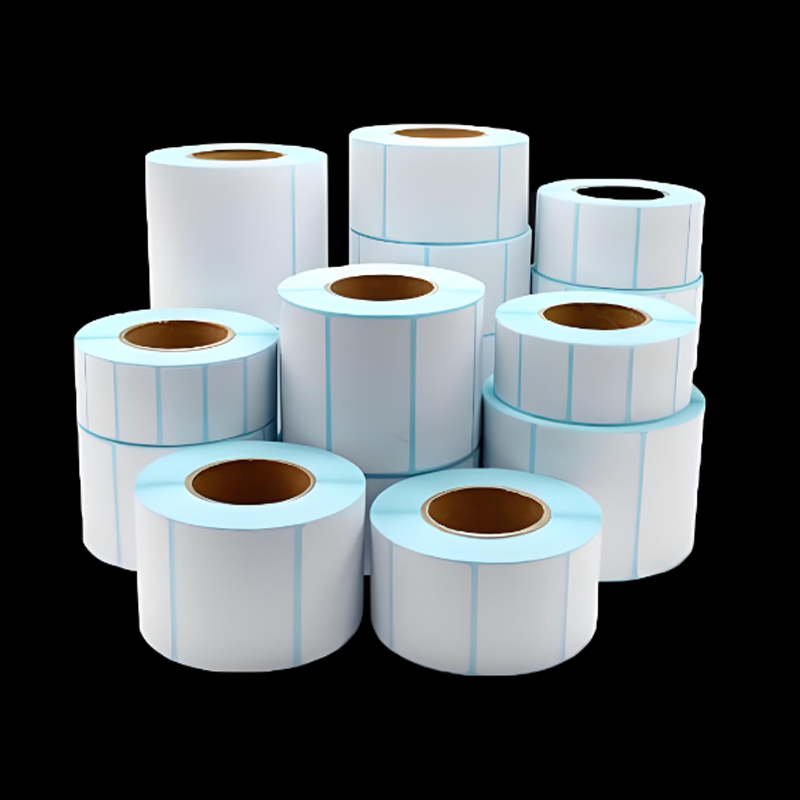 R-HRM-3F 3-Proof Hot Glue Grid Thermal PaperA 3-proof thermal paper with a hot-glue grid base and customizable adhesive thickness and 180° peel force for label-material sourcing.View Product →
For anyone mapping a new line to a product family, our guide to roll coating technologies, tolerances and material selection walks through the same decision tree from the material side.
Buying a coater without a structured trial is the single most common way to end up with a machine that runs beautifully on the vendor's demo fluid and badly on yours.
Step 1 — Define the fluid
Viscosity curve versus shear and temperature, solids content, solvent system, pot life. Everything downstream follows from this.
Step 2 — Pilot on narrow web
200–300 mm width is enough to expose ribbing, dewetting and edge bead before you commit capital.
Step 3 — Run a gauge study
Thirty points across the web, five positions along the roll. Report 3-sigma, not the average.
Step 4 — Test the dryer
Residual solvent, adhesion and colour shift at 80%, 100% and 120% of design speed.
Step 5 — Eight-hour acceptance
One continuous run with a splice, a stop-start and a roll change. If the profile holds, the line is ready.
Budget realistically: a mid-width pilot line with a two-zone dryer typically lands well below a production machine, and the data it generates is what makes the production purchase defensible to a finance committee.
A coater is a precision instrument that lives in a dirty environment. The maintenance schedule is part of the tolerance specification, not an afterthought.
Compliance follows the market, not the machine. Solvent lines need VOC abatement and zone classification for the coating head and dryer inlet; adhesive products for electronics usually require UL recognition and REACH/RoHS documentation; battery materials increasingly require IATF 16949 process discipline and traceability from incoming substrate lot to finished roll. Ask for the incoming certificate of analysis per lot — substrate gauge variation is one of the few error sources you cannot tune out.
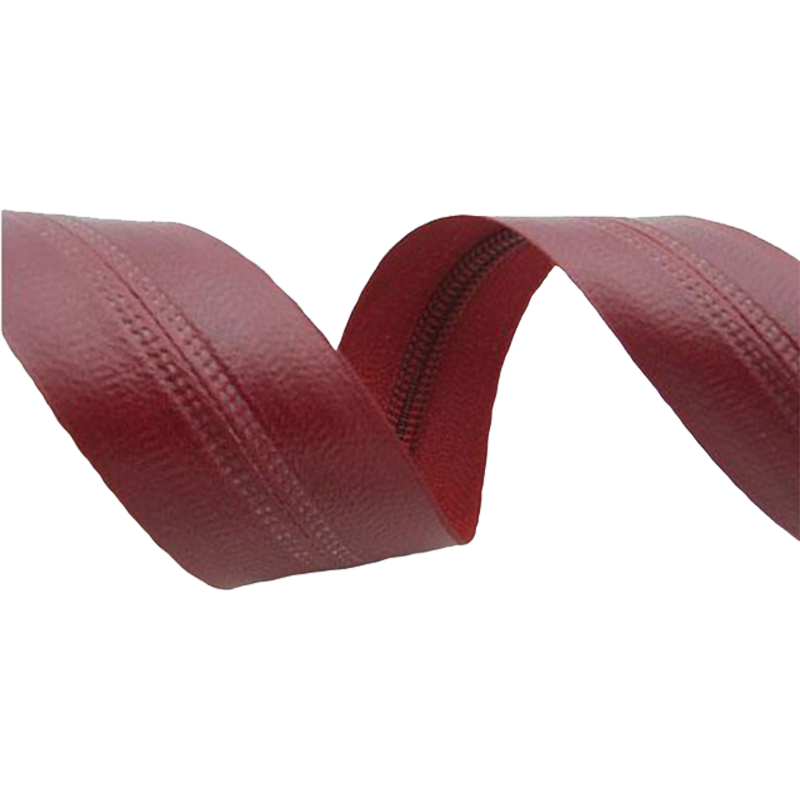 YH-TFTR 50# Dual-Silicone Hot Melt Adhesive FilmA substrate-free dual-silicone hot-melt adhesive film with customizable glue thickness, presented for inquiry within functional composite materials and hot-melt film sourcing.View Product →
Hot-melt systems deserve a note of their own: no solvent, no dryer, but a heated die and a fluid whose viscosity changes sharply with temperature. A 5 °C drift at the die translates into a visible coat-weight change within minutes, so temperature control on the melt tank and hose is as important as the metering gap itself.
The practical rule holds across every format: match the coating head to the fluid, then over-invest in tension, roll geometry and dryer balance. That is the difference between a coater that meets a specification on the acceptance day and one that still meets it in year five.
Your email address will not be published. Required fields are marked *
 Self Adhesive Label Material Manufacturers