
 English
 русский
 Español
 عربى
عربى
Product Consultation
Your email address will not be published. Required fields are marked *

Coming From China, Marketing To The World.
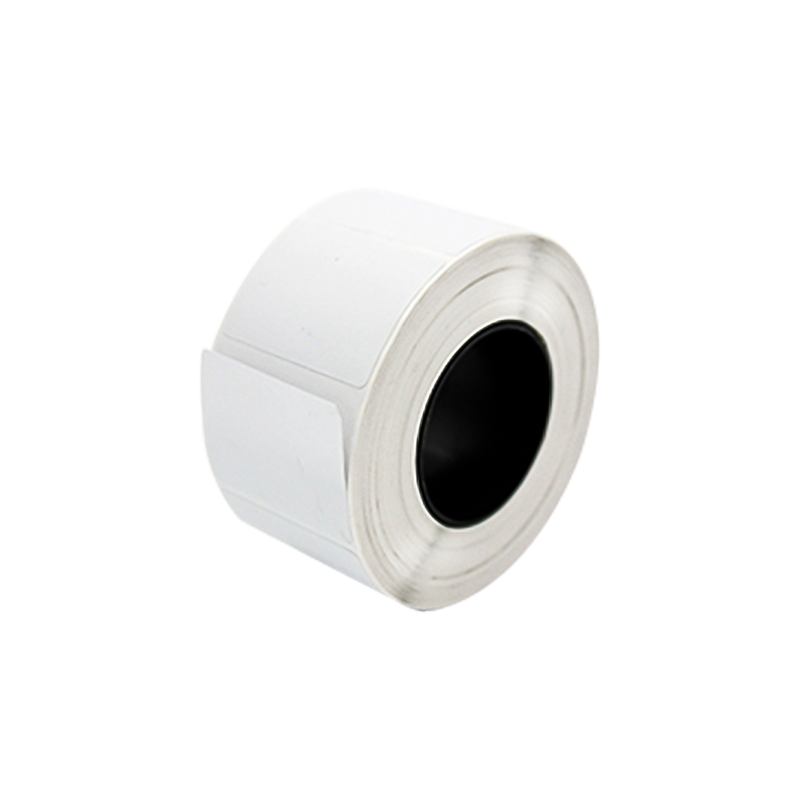
Synthetic paper labels constructed from pearlescent polypropylene film solve the fundamental failure point of traditional paper facestocks in frozen food packaging: fiber disintegration upon moisture exposure. Unlike cellulose paper that wicks condensation into its pulp structure and turns soggy, synthetic paper is a non-porous, biaxially oriented film that rejects water at the surface. This allows it to emerge from freezer-to-microwave cycles with print integrity intact. For brand owners, the label's compatibility with both flexographic and UV digital inkjet printing means short runs of seasonal frozen products and mass-produced frozen vegetable lines can carry the identical visual standard on a substrate that won't peel, wrinkle, or flag at the edges after months in a sub-zero supply chain.
Content
The failure mechanism of paper labels in frozen environments is multi-stage and begins before the product reaches the consumer's freezer. A standard semi-gloss paper facestock carries a surface coating but retains a porous cellulose core. When the labeled package travels from a blast freezer at -25°C through ambient dock doors, condensation forms on the label surface and penetrates through pinholes in the coating. This moisture swells the paper fibers, causing the label to expand slightly. The adhesive layer beneath absorbs water and loses cohesive strength. Upon return to freezing temperatures, the absorbed water crystallizes, expanding by roughly 9% in volume, which mechanically fractures the paper-adhesive interface. The visible result is bubbling, edge lift, and eventual label loss. Synthetic paper eliminates this entire chain because it has no fibers to hydrate and no pores to wick liquid.
Pearlescent synthetic paper is not a coated sheet; it is a co-extruded polypropylene film containing microscopic cavities within its core layer. These cavities scatter light, producing the characteristic pearl shimmer without adding any pigment or coating that could delaminate. The surface layers are solid polypropylene skins, corona-treated to a minimum dyne level of 38 to 42 mN/m. This treatment grafts oxygen-containing functional groups onto the polymer surface, converting it from hydrophobic and ink-repellent to hydrophilic and ink-receptive. For the label printer, this dyne level is the critical process input that determines whether UV inkjet dots anchor sharply or spread into a blurry pool. A properly treated synthetic paper sheet holds a droplet contact angle below 10 degrees for UV-curable inks, matching the wettability of the best coated papers without any of their moisture sensitivity.
The functional specifications of pearlescent synthetic paper set it apart in quantitative terms. Its water absorption after 24 hours of total immersion is essentially zero percent, compared to 50-60% for uncoated paper and 15-25% for heavily coated wet-strength papers. Tear strength measured by the Elmendorf method runs approximately 300 to 500 mN in both machine and transverse directions, a factor of three to five times higher than an equivalent caliper paper. This multidirectional tear resistance is crucial for frozen food applications because a bag of frozen peas tossed onto a conveyor or dropped into a shopping cart subjects the label to sudden shear forces. A paper label tears along a fiber alignment direction; a synthetic paper label distributes the load across its polymer matrix and recovers its shape.
Flexography remains the dominant print method for long-run frozen food packaging labels due to its cost efficiency at volumes above 50,000 linear meters. Printing pearlescent synthetic paper on a flexo press requires a specific ink system and plate configuration. The ink must be an oxidation-drying or UV-curable formulation specifically designed for non-porous films. Solvent-based flexo inks designed for paper will not dry on synthetic paper and will offset onto the press rollers within a few thousand impressions. The anilox roll cell volume should be selected in the 3.5 to 5.0 BCM range to deposit a thinner ink film than paper requires, because the ink sits entirely on the surface rather than partially absorbing into a coating.
The smooth, non-absorbent surface of pearlescent synthetic paper produces less dot gain than uncoated paper but slightly more than a high-gloss coated paper. A digital photopolymer plate with a flat-top dot structure and a Shore A hardness of 60 to 65 delivers the optimal ink transfer. The screening algorithm should compensate for a total dot gain of 15% to 20% at 50% tone, achieved through bump curve adjustments in the prepress workflow. If the plate is too soft or the impression too heavy, the highlight dots will squash into elongated ellipses, creating a visible graininess in light flesh tones on food photography. Maintaining a minimum 2% highlight dot on plate ensures that vignette edges transition smoothly to zero without a hard break.
UV digital inkjet printing on synthetic paper unlocks the ability to produce multiple SKU labels without plate costs, making it the preferred route for frozen food brands that run seasonal items, limited-edition flavors, or regionalized packaging with variable ingredient declarations. Modern UV inkjet presses using LED pinning technology deposit a droplet of approximately 3 to 6 picoliters and immediately partially cure it with a UV-LED exposure before a final cure station completes the polymerization. This pinning step prevents the droplet from spreading on the non-absorbent synthetic paper surface, achieving a printed dot that is round and well-defined rather than an irregular splatter. The resulting text remains legible down to 4-point type, critical for ingredient lists and nutritional panels that must comply with FDA or EU labeling regulations.
UV ink adhesion to synthetic paper is not guaranteed simply by using a "digital" label stock. A cross-hatch tape test according to ASTM D3359 must achieve a 5B classification: no ink removal at any cut intersection. If the top-coated polypropylene surface has aged beyond its optimal corona treatment window, the UV ink will adhere poorly and flake off under the tape. Pre-use verification with dyne test pens matching the required 40 mN/m level is a mandatory incoming material check. Additionally, some UV ink formulations designed for paper contain adhesion promoters that are unnecessary on film and can cause intercoat adhesion failure when overprinted with varnish. The correct ink set for synthetic paper is specified by the ink manufacturer as "polypropylene-compatible" or "film-grade," and it should be validated through a 24-hour post-print cure adhesion check before the full production run is released.
When selecting a label material for frozen food, three options typically enter the conversation: wet-strength coated paper, vinyl (PVC) film, and polypropylene synthetic paper. Each has a specific strength and failure mode that determines suitability for the cold chain.
| Property | Wet-Strength Paper | Vinyl (PVC) | Synthetic Paper (PP) |
|---|---|---|---|
| Water Absorption | 15–25% | ~0% | ~0% |
| Tear Resistance | Low | High | High |
| Print Quality (UV Inkjet) | Good (limited by coating) | Moderate | Excellent |
| Environmental Profile | Biodegradable (uncoated) | Chlorinated, restricted | Polyolefin, recyclable stream |
| Freezer Durability | 6–12 months (edge risk) | 2+ years | 2+ years |
Vinyl offers comparable durability but faces increasing regulatory restrictions due to chlorine content and plasticizer migration concerns, particularly for food contact applications where indirect additive transfer is scrutinized. Synthetic paper, as a pure polyolefin, aligns with packaging sustainability roadmaps that seek to eliminate halogenated polymers. It also offers the distinct advantage of the pearlescent appearance, which coated paper can only approximate through mica-based pearlescent coatings that add cost and are prone to cracking when the label is flexed on a soft package.
Frozen food includes not only dry products like vegetables but also high-fat items like frozen pastries, ice cream tubs, and marinated proteins. Oil migration from the food product through the packaging film can attack a paper label from the back side, softening the adhesive and staining the facestock. Synthetic paper's polypropylene matrix is inherently oleophobic at the polymer level; it resists oil penetration even when the surface corona treatment has slightly raised its surface energy. In accelerated aging tests where labeled packages are cycled between -20°C and 25°C with 85% relative humidity, synthetic paper labels show no oil wicking, no adhesive ooze, and no print degradation after 30 cycles. This performance is unmatched by any cellulose-based label stock and positions synthetic paper as the default specification for frozen food products with a high fat content or extended cold chain dwell times.
The label facestock is only half of the system. The pressure-sensitive adhesive must bond at application temperatures that may range from ambient down to -10°C for some filling lines, and it must maintain that bond through freezer storage at -25°C. A standard hot-melt adhesive loses its viscoelasticity at sub-zero temperatures and transitions into a brittle glassy state where it cannot absorb stress. For synthetic paper labels on frozen food, the adhesive should be a freezer-grade acrylic emulsion with a glass transition temperature below -40°C. This ensures the polymer chains retain segmental mobility at freezer temperatures, allowing the adhesive to dissipate energy when the labeled package flexes or drops. Minimum application temperature should be verified with the adhesive supplier and correlated to the label applicator's dwell time and pressure settings. A label that passes a 24-hour bond test at room temperature can still fail catastrophically after 48 hours at -25°C if the adhesive is not cold-temperature rated.
Achieving the full visual potential of pearlescent synthetic paper requires a print-ready file workflow that accounts for the substrate's optical properties. The pearlescent effect is not a metallic reflection; it is a soft, directional luster that peaks at grazing angles and recedes to a matte white at normal incidence. This means that heavy ink coverage will obscure the pearlescence entirely, while light screen tints will allow the shimmer to interact with the printed design. The following file preparation rules maximize the synergy between print and substrate:
Labels for frozen food packaging fall under indirect food additive regulations because substances from the label can potentially migrate through the packaging material. The synthetic paper facestock must comply with EU Framework Regulation (EC) No. 1935/2004 and, where applicable, the specific measure on plastics, (EU) No. 10/2011, if the label is considered part of the plastic packaging article. UV-cured inks and varnishes must be formulated from photoinitiators and monomers listed on the positive lists of Swiss Ordinance SR 817.023.21 or the EuPIA Suitability List for indirect food contact. Low-migration UV inkjet inks designed for food packaging applications have been validated to keep total migration below the 10 ppb detection limit for non-evaluated substances when printed and fully cured according to the ink manufacturer's specified parameters. Brands should request a documented migration compliance statement from both the synthetic paper supplier and the ink manufacturer as part of their packaging material specification.
Selecting synthetic paper labels for frozen food is a system engineering decision, not a commodity purchase. The optimal specification integrates the facestock, the top coating for ink receptivity, the adhesive chemistry, and the liner type into a single validated construction. A typical frozen vegetable brand might specify: 80-micron pearlescent PP facestock with a matte UV digital top-coat, a freezer-grade acrylic adhesive, and a 60-micron glassine liner. This combination prints at 1200 dpi on a UV inkjet press with 6-picoliter droplets, labels at ambient temperature on a high-speed automatic applicator, and endures 18 months of freezer storage followed by consumer interaction that includes squeezing, defrosting, and wiping the package surface. No single component achieves this outcome; the integration and validation of the entire label system is what delivers a frozen food label that looks as fresh as the day it was printed.
Hot Melt Adhesive Film Guide: Types, Applications & How It Works
Thermal Paper Rolls: The Complete Guide to Efficiency & Performance
Your email address will not be published. Required fields are marked *
 Self Adhesive Label Material Manufacturers