
 English
 русский
 Español
 عربى
عربى
Product Consultation
Your email address will not be published. Required fields are marked *
Coming From China, Marketing To The World.
A label converter running a powder-coating line once called us about a 50 µm clear PET masking roll that had curled at the edges inside a 190 °C curing oven. The film was fine at five minutes and ruined at eight. That single failure explains what "film pet high temperature" really means in practice: standard PET is not a heat-resistant material by default, but the right grade of it survives far more heat than most buyers assume.
Here is the short version. Standard biaxially oriented PET performs from about −70 °C to 150 °C. Heat-stabilized PET holds continuous service at 180–200 °C and tolerates peaks near 230 °C for a few minutes. Above that ceiling you need PI film or a different substrate altogether. Once the temperature question is settled, the real risk moves to shrinkage, adhesive chemistry, liner flatness and slitting tolerance.
Content
The conclusion first: PET does not fail at high temperature because it melts. It fails because the orientation locked into the film during stretching relaxes, and the film shrinks. Buy a heat-stabilized grade and you move that ceiling from roughly 150 °C to roughly 200 °C without changing substrate.
Polyethylene terephthalate is semi-crystalline, and its glass transition temperature sits near 78 °C. Below that point the film is stiff and dimensionally stable. Above it, the amorphous regions soften and the molecular orientation starts to relax. What you observe on the line is edge curl, width loss, and eventually adhesive ooze onto the tooling.
The crystalline fraction is what saves PET. Crystals do not melt until roughly 250–260 °C, so a properly heat-set film can hold its shape long after the amorphous phase has softened. Heat stabilization is essentially an annealing step: the film is held under tension at elevated temperature so most of the shrinkage happens in the factory rather than in your oven.
Sequential biaxial stretching leaves more residual strain in the machine direction. A film that measures flat on delivery can still shrink 2–3% across the web after twenty minutes at 160 °C.
Heat-stabilized grades are annealed under tension. Suppliers typically publish residual shrinkage below 0.5% at 150 °C for 30 minutes, compared with 1.5–3.0% for standard film.
Silicone adhesives retain peel strength past 200 °C; rubber-based systems soften from about 70 °C; acrylics generally top out near 120–150 °C. The film may survive the oven while the adhesive does not.
Release coatings, primers and liner grammage decide whether the roll stays flat through a hot tunnel and whether removal leaves residue on the part.
The numbers below are typical datasheet values, not guarantees. Your oven profile, dwell time, web tension and part geometry will shift them, so treat the table as a screening tool before you request samples.
Sometimes the part, not the film, sets the limit. When a nameplate or identification label travels through a 110–130 °C drying tunnel on equipment housings, a high-temperature-resistant white PVC adhesive film is often the more practical and cheaper choice than a heat-stabilized PET label stock, provided the surface is smooth and the removal requirement is low.
 SVLWA 80#E(W) High-Temperature Resistant White Base PVC Adhesive FilmSubstrate: PVC Glue thickness: Customizable 180 ° steel plate peeling force: CustomizableView Product →
Buyers usually compare thickness and price. The two numbers that decide whether a run succeeds are free shrinkage after thirty minutes at temperature, and peel retention after the same exposure. The chart below shows why a cheap roll becomes expensive at 200 °C.
Bar height represents free shrinkage after 30 minutes, indexed to a common scale.
Peel retention tells a similar story. A silicone adhesive on a heat-stabilized carrier often keeps roughly 85% of its original peel after 30 minutes at 200 °C, and still lifts cleanly without residue. A rubber-based adhesive on the same carrier will leave a smear that needs solvent wiping, which usually costs more than the film.
Demand is not spread evenly. The chart below reflects how high-temperature PET consumption typically breaks down across process industries.
The battery segment is where PET runs out of headroom first. For CCS hot pressing and FPC copper foil bonding, where 200 °C is held for several minutes under pressure, a PI thermosetting film with a VTM-0 flame rating replaces PET entirely rather than being layered on top of it.
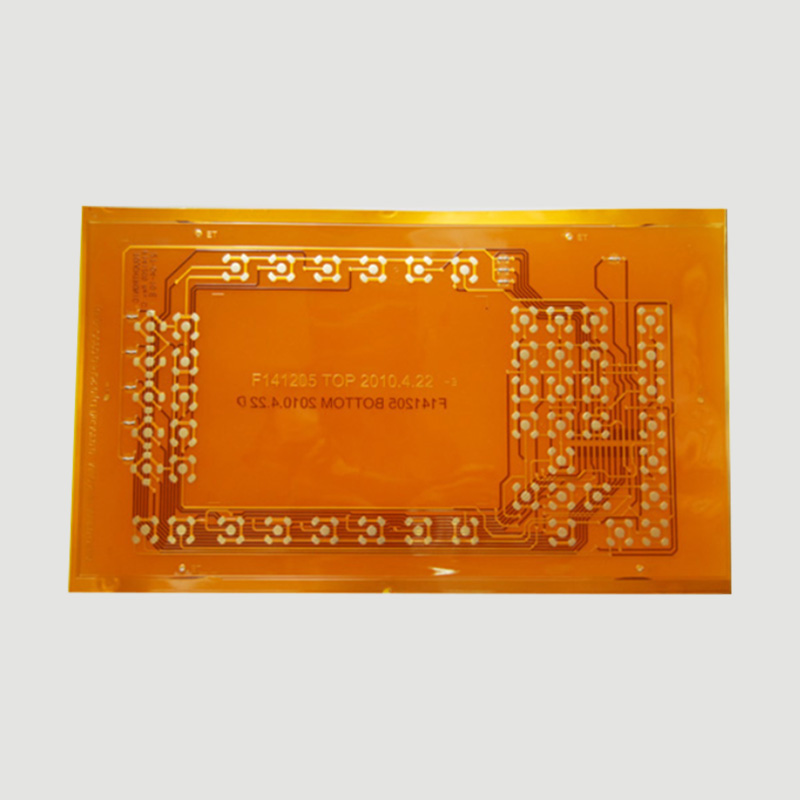 YH-RFPI 50# VTM-0 PI Thermosetting FilmSubstrate: PI Glue thickness: customizable 180 ° aluminum plate peeling force: ≥ 17N/25mm Flame retardant grade: VTM-0View Product →
Not every high-temperature job is a masking job. Identification labels that pass through wave soldering, laser marking stations or washing cycles need a facestock that keeps its print and stays flat. PET is usually the right answer because it absorbs almost no moisture and does not stretch during die cutting.
Two practical variants dominate. The first is a matte silver PET film combined with a UL-recognized adhesive, used where the label sits on a metal housing that heats up in service and where agency documentation matters. The second is laser engraving film, either fracturable or non-fracturable, used to produce permanent barcodes and asset tags. If you are comparing those substrates, this breakdown of heat-resistant laser label material substrates covers performance trade-offs in more detail.
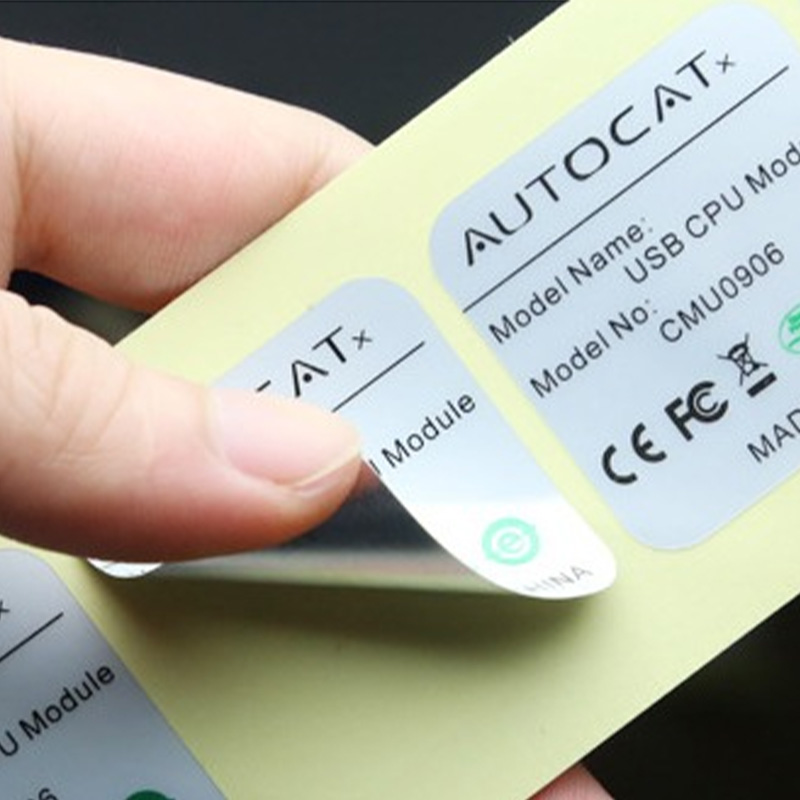 TLSMB 50#(W)A White Thick Base UL Adhesive Color-Changing Matte Silver PET FilmSubstrate: Color changing matte silver PET Glue thickness: customizable 180 ° steel plate peeling force: customizableView Product →
One caution on tolerances: a 50 µm PET label stock that is specified as ±5% on thickness can vary enough between lots to change your die-cutting pressure. Ask for the measured value, not the nominal one.
Attach a thermocouple to the actual substrate. Oven displays routinely read 20–30 °C higher than the part during a short dwell.
Heat-stabilized PET is the workhorse at 180–200 °C continuous. If you need 230 °C for more than five minutes, step up to PI rather than pushing PET harder.
Silicone for bare metal and clean removal, acrylic for general purpose, rubber only where temperatures stay below 80 °C.
Thicker film resists curl but conforms less around radii. Specify slit width tolerance, typically ±0.2 mm, and core diameter before quoting.
Two or three pilot rolls through the real process will reveal curl, residue and shrinkage faster than any datasheet comparison.
Heat-resistant film is still a coated polymer product, and it degrades on the shelf if stored badly. Keep rolls in their original wrap at 23 ± 5 °C and 50 ± 10% relative humidity, away from direct sunlight and ozone sources. A twelve-month shelf life from the production date is a reasonable baseline, and pressure-sensitive adhesives gain tack as they age, so rotate stock rather than stockpiling.
Compliance paperwork rarely wins the order, but missing certification loses it. Keep the declarations current and matched to the exact construction you are shipping.
Choosing film for high-temperature PET applications comes down to one honest question: what temperature does the part actually see, and for how long. Answer that with a thermocouple, then match shrinkage, adhesive and flame rating to the answer. Standard PET is a fine material up to 150 °C, heat-stabilized PET covers most industrial processes up to 200 °C, and PI takes over when those limits are exceeded. Get that sequence right and edge curl stops being a recurring production problem.
Your email address will not be published. Required fields are marked *
 Self Adhesive Label Material Manufacturers