
 English
 русский
 Español
 عربى
عربى
Product Consultation
Your email address will not be published. Required fields are marked *

Coming From China, Marketing To The World.
Content
PI thermosetting film functions as a primary failsafe against catastrophic battery failure. In the high-energy-density landscape of electric vehicles and grid storage, it is not merely an insulating wrapper; it is a chemically cross-linked barrier engineered to prevent thermal runaway. This material remains dimensionally stable and electrically insulative at temperatures where standard thermoplastics would melt, shrink, or combust, effectively isolating short circuits before they can propagate. Its core value proposition is ensuring the safety and stability of battery cells without compromising on the thinness and lightness required for compact pack designs.
The "thermosetting" nature of this polyimide film is its defining advantage. Unlike thermoplastic films that soften when heated, the irreversible cross-linking during the curing process gives the PI film a glass transition temperature exceeding 300°C. In a real-world thermal event scenario, an internal cell short can generate temperatures up to 500°C or more. A standard PP or PE separator will shrink and fail, creating a cascading reaction. The PI thermosetting film, however, maintains its form, providing a persistent insulating barrier between the anode and cathode or between the cell and the module casing.
Data from thermomechanical analysis shows that high-quality PI film exhibits less than 0.1% thermal shrinkage at 300°C. This is a defining safety parameter. For example, in prismatic cell assembly, an insulation film that shrinks even by 2% can expose electrode edges, creating a direct path for an internal short. By retaining its precise die-cut geometry under thermal stress, PI thermosetting film ensures that the designed electrical clearance distances are maintained throughout the battery's life cycle, from aggressive fast-charging heat spikes to long-term cycling.
Battery electrolytes, composed of lithium salts in organic carbonate solvents, are chemically aggressive. PI thermosetting film demonstrates exceptional resistance to these electrolytes, with a tensile strength retention rate of over 90% after 1,000 hours of immersion at 85°C. This resistance prevents the film from swelling, weakening, or dissolving—a critical property for maintaining compression force in cell stacks and preventing the leaching of contaminants that could degrade cell chemistry.
PI thermosetting film is strategically placed in multiple critical locations within a battery pack, each demanding a specific set of film properties. The table below outlines these primary applications, the failure mode they address, and the corresponding film performance requirement.
| Application Zone | Primary Failure Mode Addressed | Critical Film Property |
|---|---|---|
| Cell-to-Cell Insulation | Thermal Runaway Propagation | High Dielectric Strength (>200 kV/mm) |
| Busbar & Collector Insulation | Arc Tracking & Short Circuit | Flame Retardancy (UL94 VTM-0) |
| Cell Wrapping & Fixation Tape | Abrasion & Electrolyte Corrosion | High Tensile Strength & Chemical Resistance |
The performance of PI thermosetting film is only fully realized when it is correctly integrated into high-speed automated battery production lines. Its processing characteristics dictate assembly efficiency and final product yield. A common challenge is the film's natural stiffness, which requires precise tension control during lamination.
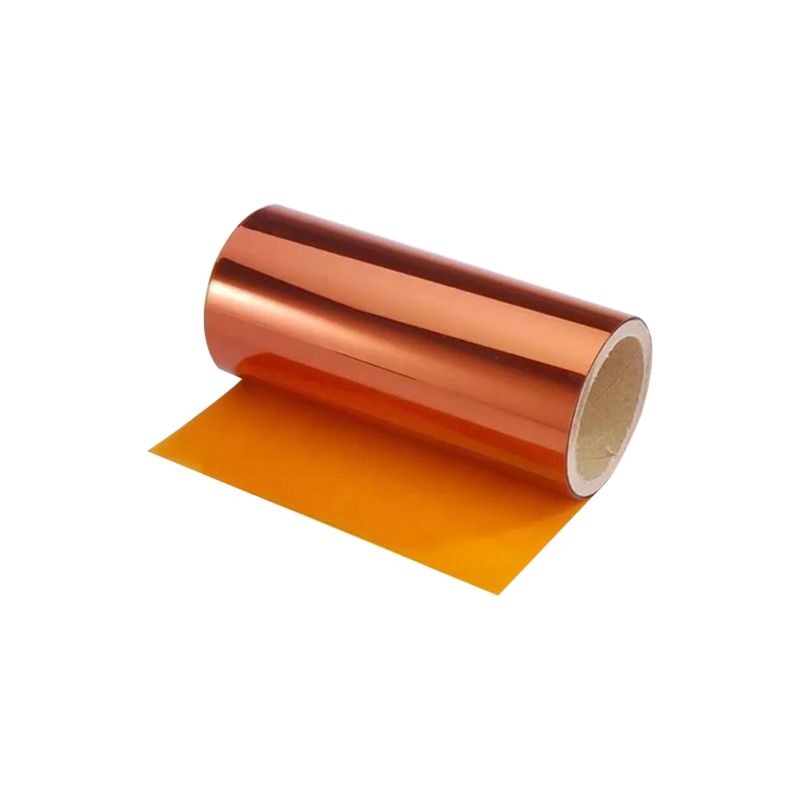
For high-volume cylindrical and prismatic cell production, the film is often supplied as pre-cut shapes with a pressure-sensitive adhesive (PSA). Modern PI films are paired with specially formulated silicone or acrylic adhesives that withstand battery manufacturing electrolytes and thermal cycling. Automated optical inspection (AOI) systems guide placement robots with a precision of ±0.1mm, ensuring complete coverage of the designated insulation area without interfering with the welding tabs. The zero-void, edge-sealed application is the ultimate goal, preventing corrosive electrolyte wicking under the film.
The lamination process must create a bond that is as durable as the film itself. A critical quality test is the 180° peel strength at elevated temperatures. A premium PI thermosetting adhesive tape will maintain a peel strength of over 10 N/25mm at 150°C on an aluminum cell casing. This prevents delamination, which could create an air gap that reduces thermal management efficiency and introduces a potential path for short circuits.
To appreciate the specific value of PI thermosetting film, it must be measured against other high-performance insulation materials used in battery packs. The following list highlights where PI fundamentally outperforms alternative solutions and where trade-offs are considered.
For battery development engineers and procurement teams, specifying a PI thermosetting film goes beyond a datasheet comparison. It requires a deep dive into the supplier's process control, as variations in the imidization process directly affect the film's final mechanical and thermal properties. The conversation must move from "which film?" to "which film can deliver zero-defect reliability in a production run of one million cells?" Key acceptance criteria should include a guaranteed thickness tolerance of ±5% to ensure consistent compression in a cell stack, and certification of the film's corona treatment level, measured in dynes, to confirm long-term adhesion reliability for any applied PSA. This precision engineering of the supporting material is what ultimately enables the safety and stability of new energy technologies on the global stage.
Thermal Paper Rolls: The Complete Guide to Efficiency & Performance
Hot Melt Adhesive Film HS Code: A Complete Classification Guide for Importers
Your email address will not be published. Required fields are marked *
 Self Adhesive Label Material Manufacturers